
This is my second letter to you in a week. In the last letter I discussed your politics; in this, let us have a look at the country’s Economy since 2014. You came to power in 2014 by assuring the people ‘Achche Din Aayenge’. Indian voters, fed up with the uncertainties of coalition governments and reports of scam after scam during the second term of Dr Singh, turned the tide in your favour. In 2019, you thrived on the anti-Pakistan wave (the last resort of all politicians in power) and consolidated your position. You rode the 2024 polls rather precariously (both the NDA and BJP returned with reduced numbers) by reviving the ‘5 Trillion Dollar Economy’ slogan- promising very rapid growth- first uttered in 2019.
It is interesting to note that while we are still waiting for the Achche Din; Pakistan has made, to our dismay, an international impact by mediating between the US and Iran, and our Economy has barely reached 4 trillion with lots of spasms. According to a recent report, the Economy will reach that level in 2032-33 if the Rupee continues to fall and in 2028-29 if we manage to stop its downslide in the immediate future. If this prognosis is available to a distant observer like me, it is unlikely, very, Narendra Bhai, that it has not reached you.
Economics is a ruthless, terse business. Like the Gita says, you cannot hide reality on one hand, nor can you that the say the unreal exists in the economy. We face a peculiar dilemma here: who to believe? On one side, we have the government statistics claiming that the Economy is on the march, robust, and resilient. In support is highlighted the most recent development - India’s successful tiding over the energy crisis triggered off by the Iran-US (mini) war. Even some columnists who are otherwise critical of the government point out that due to the resilience in making petroleum reserves available to the market and delaying the inevitable price hike (till the elections in 5 states were over) Modi Sarkar saved the common man from an energy apocalypse. But as a lay intellectual, let me point out a simple reason (though I too appreciate the political diligence of your government in handling this). The crisis did not escalate basically because petrol cannot be privately stored/hoarded like other commodities.
Recently, a bigger salvo was fired by the celebrated economist Prof. Arun Kumar (ex-JNU) at the official claims about the Economy. He argued that the official statistics are inflated and unreliable, and concluded that, after a sharp scrutiny, we have to face the fact that the Economy grew at a poor 2%. I agree that JNU has been a stronghold of anti-right intellectuals, and the claims of one of them, too, need to be taken with a grain of salt. Yet the disconcerting fact remains: how could there be a gap of over 6% between official estimates and the estimates of privately working agencies? Something is rotten here, Narendra Bhai.
Prof. Kumar has scrutinised all state economic policy decisions since 2014. He claims the ‘note bandi’ was the first blow in that it failed in checking black money but, worse, destroyed the hard-earned savings of the lowest rung of the economy. All those who worked without bank accounts and earned/spent/saved only in cash suddenly lost their hopes for future. He has also pointed out that the formalization of the economy helped only the enterprises already established and doing well (since it saved a lot of paperwork and freed them from the nuisance of hungry government inspectors of this department or that) but hit very hard and the freshly launched enterprises who were yet to overcome teething troubles.
He adds that GST, too, served the upper layer better, but those who were struggling only found one more noose around their necks. He also argues that though your government goes to great lengths to maintain a pro-poor image (GYAN and other Sammans) and deposits money straight into the poors’ bank accounts, it has allowed the commodity market to ensure that every rupee received from the government will come back to the market through ever-rocketing prices. There is also a statistical detail that the Centre has transferred around 4 Lakh crores through the Jan-Dhan scheme. Don’t you see that this largesse served just the purpose of circulating state funds via the poor: they remained as poor and state-dependent as before! Had so much money been invested in some productive endeavor/s it would have created a large number of jobs and permanently elevated some of the poor.
Just open your eyes to the picture on the ground, Narendra Bhai; that will add some reality quotient to your dreams (I would be the first to protect your right to have a dream for the country). The economy is growing without doubt, but growth as the only indicator of progress has lost its place of pride long ago. Touch wood, our economy could indeed reach 5 trillion before the experts’ predictions. Yet the picture on the ground is going to remain the same. Jan-Dhan dependents will continue to be so; farmers will continue to be frustrated because of lack of indigenous pro-farmer policy to encourage better quality farming; urban poor will still be living in shanties; rural poor will continue to desperately run to metros; salaried class will be still smug and refuse to adopt decent habits of consumption; education will be still separated from employment and a culture of standing on one’s own feet; medical treatment will continue to be expensive and irresponsible; traffic jams and muddles will reduce efficiency while expressways will witness growing number of accidents; farmers already at the mercy of the weather will be further unable to find labour because of Jan-Dhan pocket money…
 The list is endless, and it has been the same since 1947…
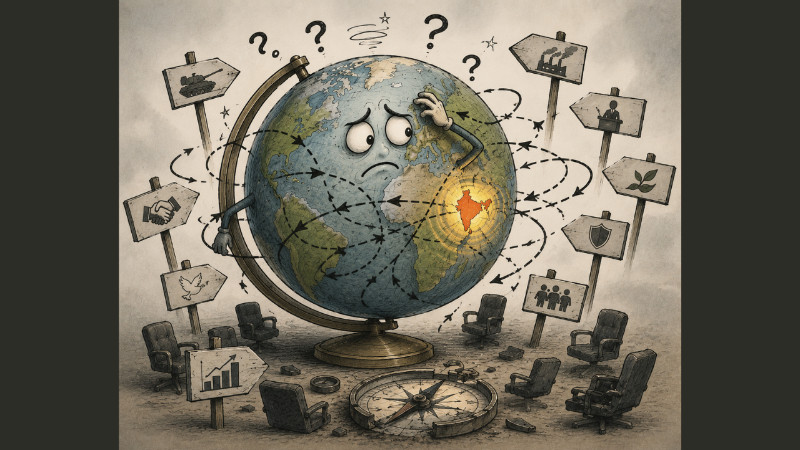
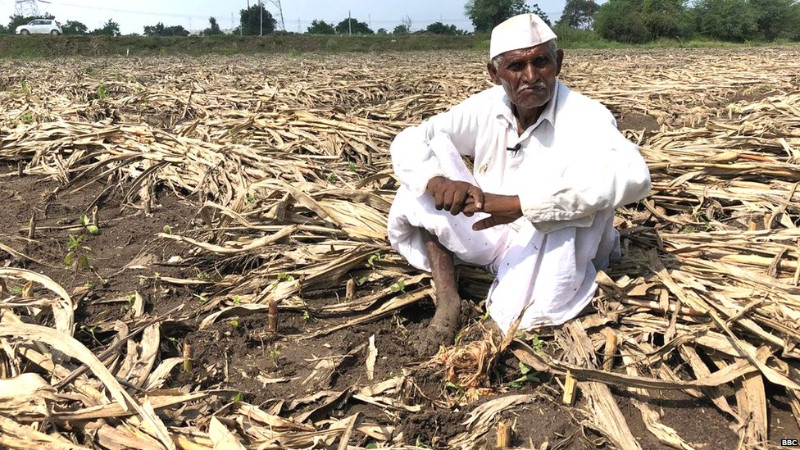
It is the need of the hour that we fix our priorities in the Economy. Sab Ka Sath, Sab Ka Vikas is just implausible, though it is sweet to the ear. Similarly, we cannot run in all directions in the Economy. It is well known now that agriculture was subject to ‘benign neglect’ (official words) during the Nehru-Indira years. After nationwide agitations for over 30 years, it is back at the top of the political agenda but still a subject of alms in the economic policy. Annadata (your own usage) is not a beggar nor a handicapped citizen looking for pity; he wants the price of his produce and also wants to see a continued rational agriculture policy instead of state charity in bad years and state neglect in the years of plenty. Jan-Dhan is killing the Annadata’s confidence in his rightful place as an agent of wealth. Instead of that, we have to initiate agro processing and marketing at the source—like the Sahyadri Farmer Producer enterprise in Nasik in Maharashtra. Presently, it stands out as an island; it should be replicated wherever possible.
Similarly, again, we need to decentralize the production industry by protecting the interests of the small and medium-scale manufacturers who are as frustrated as the middle farmers in agriculture. Having a ministry for this sector is a good start, but it should focus more on encouraging true entrepreneurs rather than providing interest-free loans to cronies.
Right now, infrastructure seems to be the top priority; rightly so. But this infrastructure upgrading is connecting the already big centres to other already big centres, leaving the middle semi-developed area almost untouched. This has to be rectified post haste; otherwise, the expressways will only help faster migration of the rural poor to the middle cities and metros.
Narendra Bhai, I support the Vishwakarma Yojana. But providing initial capital should be the start and not the end. We have to provide some technical and management guidance for the promising entrepreneurs who avail of the scheme. Further, their functioning should not be controlled but facilitated.
This is only to draw attention to the re-prioritisation of the Economy. Let me assert here that Prof. Kumar and I part company so far as the remedies are concerned; his remedies smell of the Soviet model, which has proved to be an example of “remedy worse than the malady”. I am a realist enough to concede that the wheels of the economy cannot be turned back. Whatever modernization/formalization we have carried out so far should not go to waste. Yet we cannot just put the cart before the horse in adopting a development model from the West. Narendra Bhai, they developed first with robust (at times even cruel) entrepreneurship and then defined their model/s. Wealth has to be created first and then structured. Let us launch nationwide endeavours to ensure the participation of the maximum number in reshaping the economy. I am not talking about Shram Dan here. I am talking of the participation at a creative level to evolve indigenous productive ideas which will successfully find a middle place between trillionaires on one side and beggars on the other.
Supposing India reaches the 5 trillion mark, in the near future, she will look like a patient of elephantiasis with one leg swollen to the point of ugliness. Why not have a White Paper on relaunching the national economy from 2030 onwards? I have been talking about the participation of the maximum number in economic development; participation of the maximum number in this White Paper will be the logical first step.
Narendra Bhai, you have broken too many eggs so far; now let the omelet be served…
Yours critically,
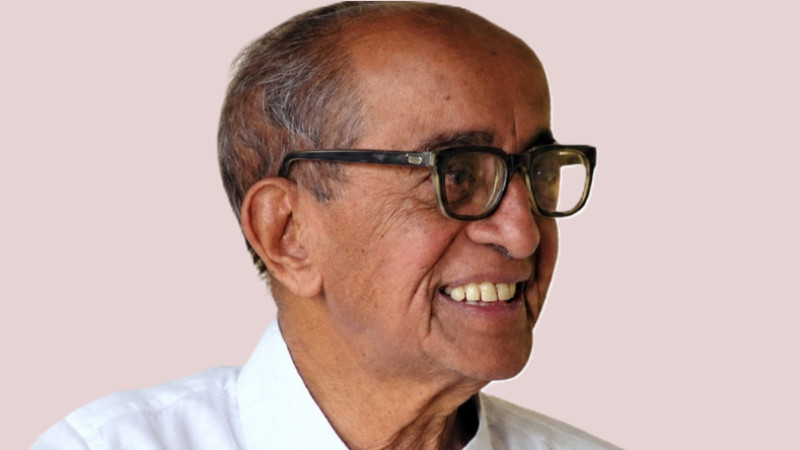
Vinay Hardikar
vinay.freedom@gmail.com
(The writer has been working in the public sphere of Maharashtra for the last five decades. His versatile personality has several dimensions, but the primary ones remain to be that of an established writer, journalist, editor, critic, activist, and teacher.)
Tags: narendra modi indian economy economics vishwakarma jan-dhan jan dhan jan dhan yojna dbt primary sector secondary sector tertiary sector agriculture infrasturucture साधना डिजिटल नरेंद्र मोदी अर्थव्यवस्था अर्थसंकल्प budget जन धन योजना विश्वकर्मा लाडकी बहीण Load More Tags
















Add Comment