
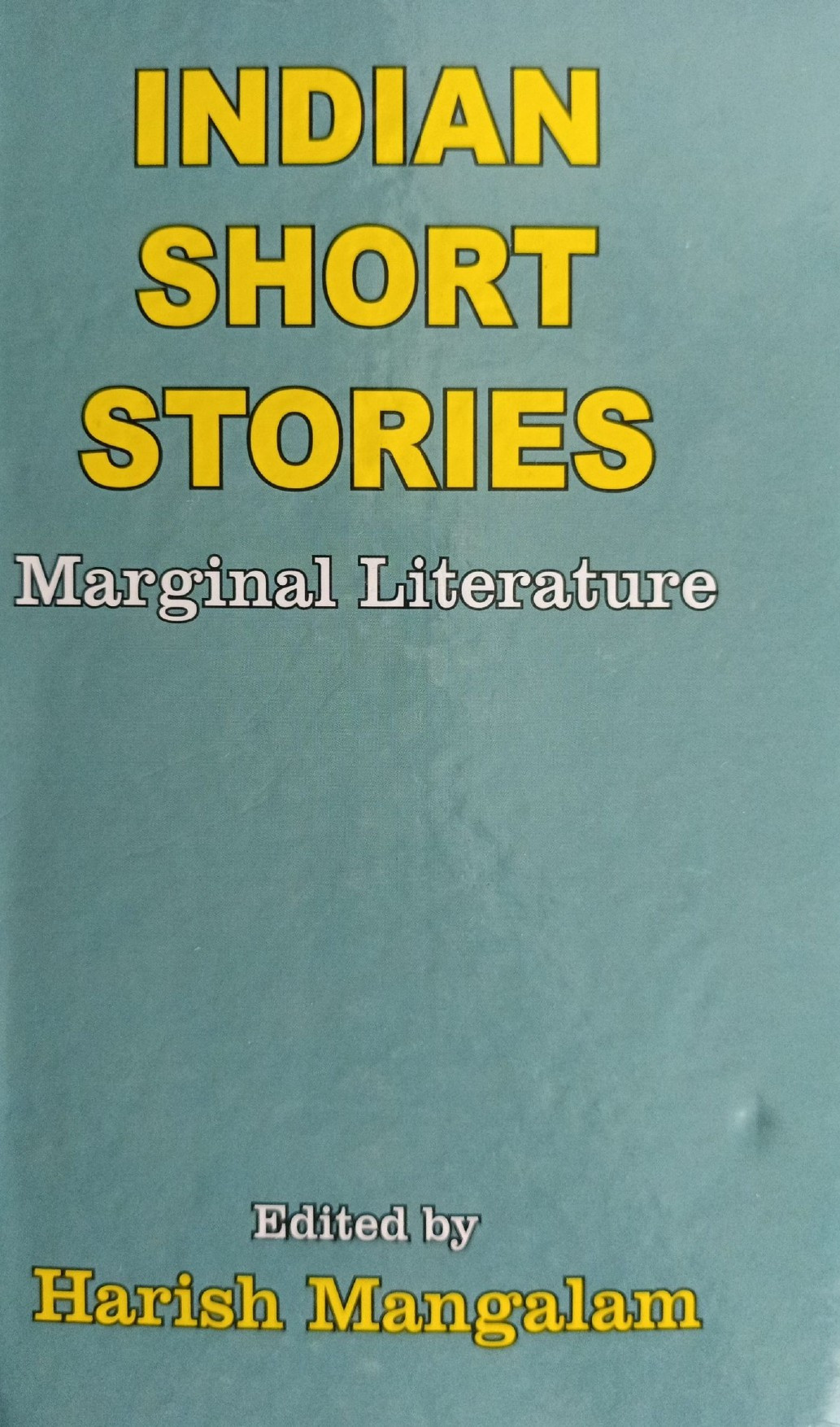
Harish Mangalam embarked on a unique project. Inspired by the ideas of Phule, Shahu, and Ambedkar, he compiled stories that expose the caste system within Hindu society, along with its centuries-old traditions of injustice and inhumanity. What makes the project remarkable is that these stories were originally written in different Indian languages. They were translated into English and published as Indian Short Stories: Marginal Literature.
It is often said that Gujarat is the laboratory of the RSS. It is also said that the RSS is a cultural organization. The political impact of its cultural work in Gujarat is well known. Around twenty-five years ago, Narendra Modi took charge of Gujarat’s administration. Since then, Gujarat has rarely looked back, successfully realizing the slogan of “शत प्रतिशत भाजप”.
At roughly the same time, a Dalit writer emerged in Gujarat with a different mission—to steer literary and social transformation in a new direction. Having spent his career as a government officer and served as an Additional Collector, he had witnessed the workings of the state from close quarters. He could not tolerate the injustices of the caste system, the varna system, or the oppression faced by Dalits, Adivasis, and Women. He did not believe that every social problem could be solved solely through politics. Instead, he recognized the power of the written word and was inspired by the transformative potential of literature, stories, poetry, and novels in creating social awareness. This led to the establishment of the Gujarati Dalit Sahitya Academy.
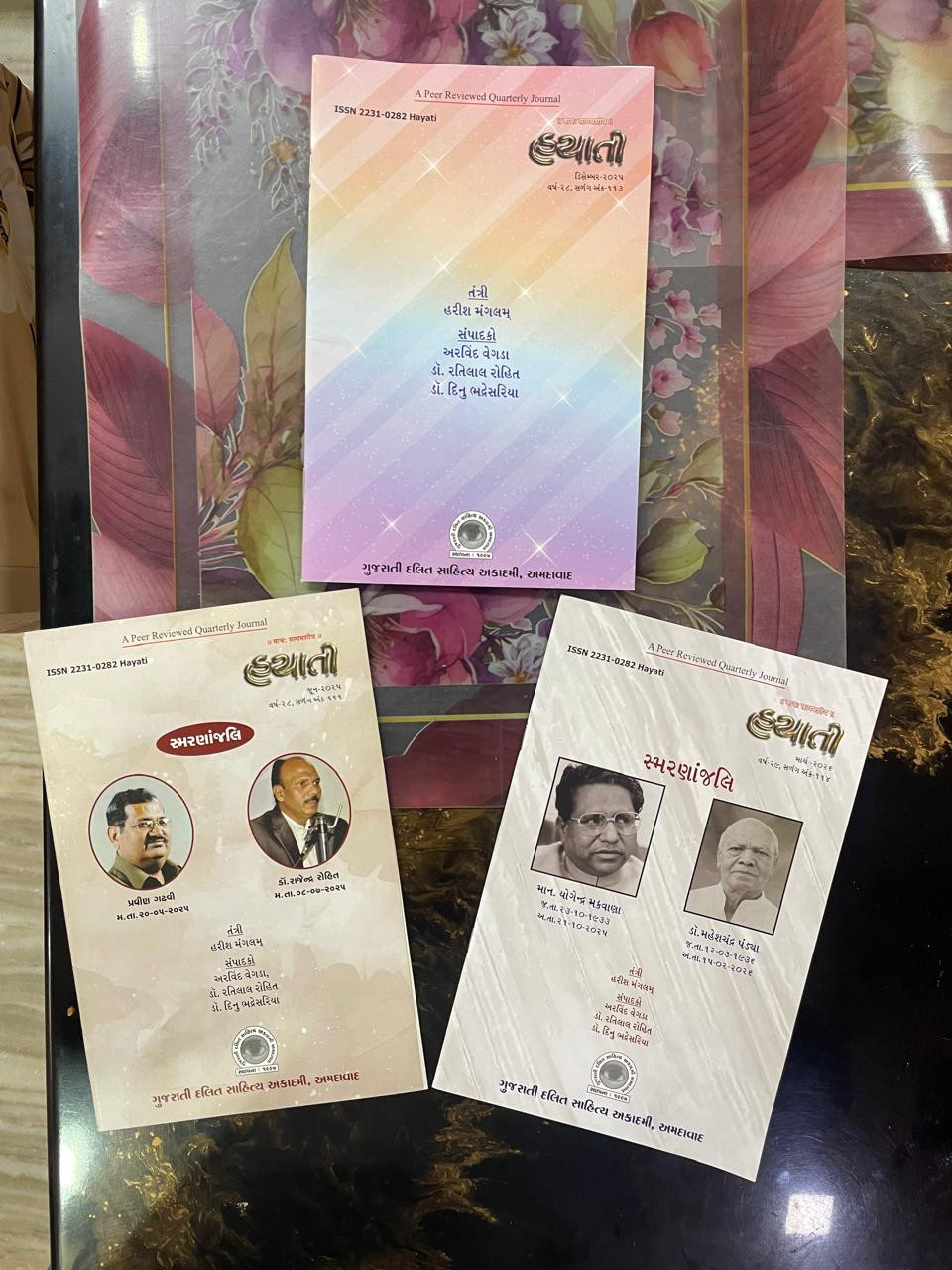
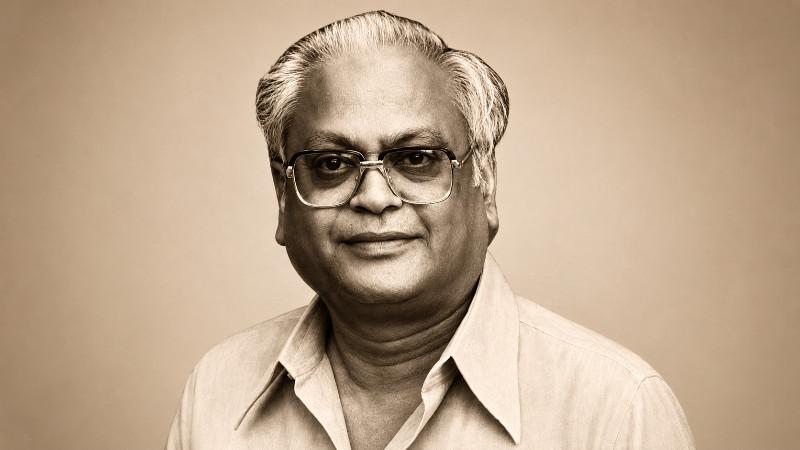
To provide a platform for literature emerging from Dalit consciousness, the magazine ‘Hayati’ was launched. Within a short period, Hayati became a powerful voice expressing Dalit anguish. Issues such as injustice, caste oppression, social hypocrisy, and exploitation began to be forcefully articulated. It gave glimpses of an emerging revolution. Another magazine initiated by the Academy, Samajshrushti, focused on portraying social problems. Thus, while the activities of the Sangh Parivar expanded vigorously on one side, a quiet yet determined Dalit literary movement unfolded on the other. The writer leading this effort in Gujarat [a state often identified with commerce and trade] is Harish Mangalam.
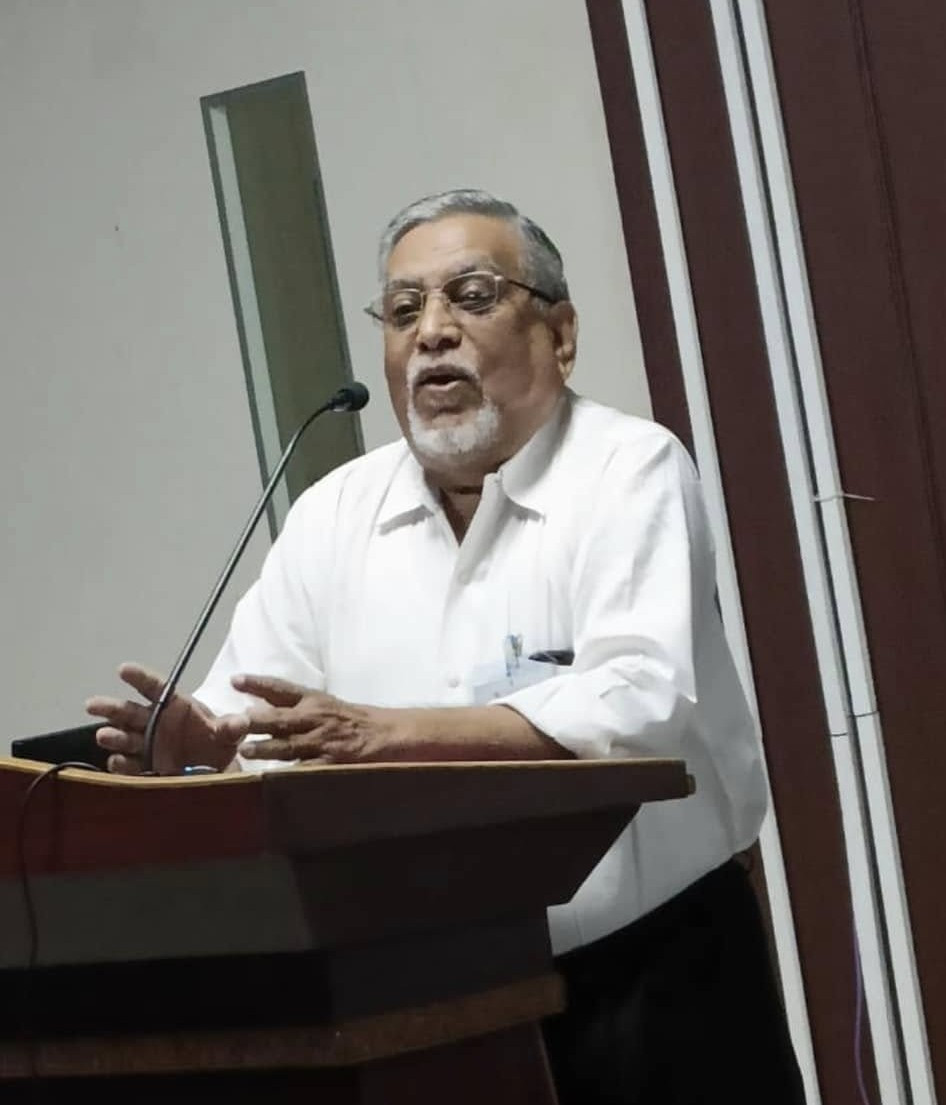
 Harish Mangalam is a writer, editor, and scholar of Dalit literature. More importantly, he is a committed social activist deeply concerned with society. In rural Gujarat, upper-caste families often call Dalit women to act as midwives during childbirth. These women are entrusted with tasks such as cutting the umbilical cord and cleaning blood. Yet afterward, the same families continue to practice untouchability and do not allow those women to touch the child again. Harish Mangalam has written numerous stories exposing such social contradictions. Dalit literature, Bahujan literature, and the writings of communities pushed to the margins of mainstream society—including Dalits, Adivasis, women, workers, and LGBTQ people—have been central to both his scholarship and his life’s work.
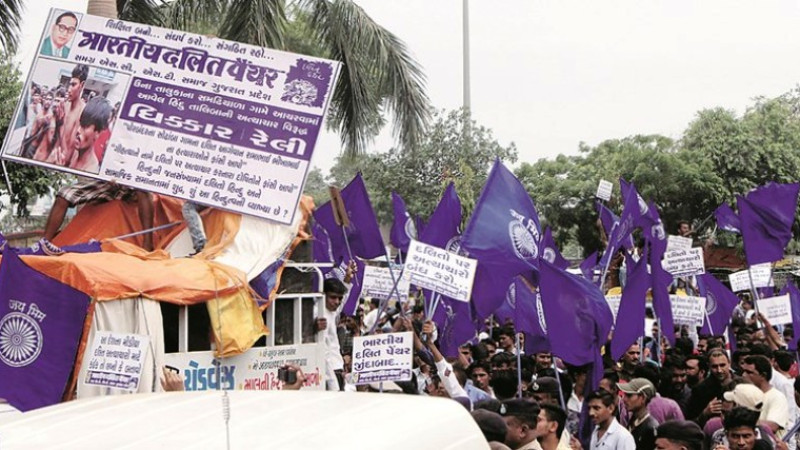
In Maharashtra, the establishment of the ‘Dalit Panther’ sparked a major social and literary movement. Harish Mangalam believes that Gujarati Dalit literature found its true spirit through this movement. Earlier writings had largely been influenced by Marxism, African American literature, and the thoughts of Mahatma Gandhi. However, the Dalit Panther movement encouraged Gujarati writers to engage with the philosophies of Phule, Shahu, and Ambedkar. As a result, Gujarati Dalit literature began to emerge as a significant literary genre. Writers such as Joseph Macwan, Harish Mangalam, Pravin Gadhvi, Arvind Vegda, Madhukant Kalpit, B. Kesharshivam, Dalpat Chauhan, Vinod Gandhi, and many others became subjects of literary study. The Academy published numerous books, contributing to the growth of Gujarati Dalit literature.
To ensure that the pain and experiences reflected in Gujarati Dalit literature transcended linguistic barriers, large-scale translation projects were undertaken. In order to make this body of literature accessible throughout India and internationally, 141 books have been published in English, Hindi, Marathi, Gujarati, and other languages. These works introduced new perspectives to the readers.
Harish Mangalam then embarked on a unique project. Inspired by the ideas of Phule, Shahu, and Ambedkar, he compiled stories that expose the caste system within Hindu society, along with its centuries-old traditions of injustice and inhumanity. What makes the project remarkable is that these stories were originally written in different Indian languages. They were translated into English and published as Indian Short Stories: Marginal Literature.
 While undertaking an analysis of this work, it is essential to take into consideration certain important aspects of Dalit literature in general:
1. From the very beginning, Dalit literature faced opposition from established literary circles. The opposition started with the very word “Dalit.” Critics argued that Dalit was a caste-based term.
Harish Mangalam has commented on this issue as well. According to him, the word Dalit is derived from the Sanskrit word dal, meaning “to crush” or “to oppress.” In this sense, Dalit is used as an adjective rather than as a caste label. Nevertheless, Dalit literature continued to assume different names over the period of time. It came to be known by various terms such as Vidrohi Sahitya, Ambedkarwadi Sahitya, and Bahujan Sahitya.
2. Another criticism was that Dalit literature was shrill and employed vulgar language.
In its early phase, Dalit anguish found expression primarily through poetry. One of the most prominent examples was Namdeo Dhasal’s poetry collection Golpitha, which represented the extreme edge of rebellion. Namdev Dhasal was the most important and respected poet of the century. Unfortunately, many emerging Dalit poets began blindly imitating Golpitha. As a result, an excessive aggressiveness became clearly visible in much of the Dalit poetry.
3. Critics also argued that Dalit literature suffered from repetitiveness in experience.
During the initial phase, poetry genre dominated Dalit literary expression. Very few writers ventured into the novel as a literary form. Consequently, the limitations of expression and the repetition of similar experiences began to become apparent to readers.
4. Another criticism was that many Dalit writers were “One Book Writers.”
It is a reality that every writer emerging from the Dalit community has endured extremely harsh and dehumanizing experiences and somehow struggled through life. Their life journeys are often perilous. Living in conditions akin to animal existence, they gradually move from subhuman life to human life. To narrate these experiences, many chose autobiography as their literary medium. As a result, everything they wished to say was often contained within a single book. That book would receive tremendous acclaim, but afterward there would seem to be little left to write about. Consequently, such writers came to be known as “One Book Writers.”
5. Eminent critic and Jnanpith Award-winning writer Dr. Bhalchandra Nemade, along with other critics, offered several important suggestions while critically evaluating Dalit literature.
6. Rather than becoming preoccupied with linguistic conventions, Dalit writers should use their own authentic language and the genuine vocabulary associated with their lived experiences.
7. Instead of merely enhancing the beauty of the standard language through their writing, Dalit authors should adopt an independent style capable of powerfully portraying the lives of the oppressed.
8. Rather than imitating mainstream or Western literature, they should prioritize experiences rooted in their own soil and social reality.
 Considering all these points, this anthology appears distinctly different. First, the editor has chosen the short story—a fictional literary form—which provides writers with creative freedom while still drawing upon their harsh lived experiences.
Also Read: साहित्यावर वंचितांची प्रखर नाममुद्रा उमटवणारा महत्तम आंबेडकरी लेखक : दया पवार (लेखक: सुदाम राठोड)
Today, we often speak of Ram Rajya (the ideal rule of Rama). However, Pravin Gadhvi’s story Assassination of Shambuk (Shambuk Vadh) reveals how ancient Puranas and religious texts often promoted discrimination, irrationality, and superstition. In the story, Shambuk, a Shudra, studies, recites mantras, and becomes an ascetic. A Brahmin, carrying the dead body of his son, approaches King Rama and complains that a Shudra has committed the sin of studying and chanting sacred mantras, and that is the reason his son has died. King Rama decides to punish Shambuk. Drawing upon this mythological episode, the story attacks the hypocritical and oppressive social order of its time. The stories based on ancient mythological stories form an important part of this collection.
A particularly noteworthy feature of India is its immense cultural diversity across different states. The lifestyles, languages, feudal attitudes that assert upper-caste superiority, and the gradual unveiling of social realities all constitute the strengths of this anthology.
As one reads through the stories, the first fifteen stories transport the reader through Gujarat, introducing its landscape, lifestyle, and culture. Gradually, different forms of resistance begin to emerge. Injustice, oppression, hypocrisy, and outdated customs come into view. The stories by writers from North India reveal the culture of the region often referred to as the “Cow Belt.” Notably, the anthology presents a variety of representations of women throughout its narratives.
Subsequent stories come from Maharashtra, influenced by the ideas of Phule, Shahu, and Ambedkar. Through the rebellious stories of Sunilkumar Das, elements of Bengali culture also begin to emerge. Stories depicting South India and showcasing Tamil and Telugu cultures offer valuable insights into the social and cultural fabric of the country. The works of Mohanlal Filauriya, Prem Gorkhi, and Gurmeet Kadiyalvee provide a distinctive glimpse into Punjabi resistance and rebellion.
Thus, on a single canvas, readers can experience stories written in Gujarati, Hindi, Marathi, Bengali, Tamil, Telugu, and Punjabi, each portraying Dalit consciousness in its respective region.
 The anthology includes stories by several important writers such as Hindi author Omprakash Valmiki, Tamil writer Bama, Telugu writer Gogu Shyamala, Bengali writer Sunilkumar Das, and Punjabi writer Prem Gorkhi. Significantly, it also contains English translations of works by renowned Marathi authors Laxman Gaikwad, Daya Pawar, Baburao Bagul, Sharankumar Limbale, B. Rangarao, and Urmila Pawar. The translations have been undertaken by distinguished scholars and intellectuals including Dr. Bajrang Korde, Dr. Atulkumar Parmar, Dr. Darshana Trivedi, and many others.
While reading this volume, one encounters the changing imagery, evolving language, and stylistic transformations within Dalit literature, as well as the diverse forms of resistance visible across different regions of India. In short, if one wishes to gain a bird’s-eye view of Dalit literature across India, this anthology is an essential addition to one’s collection.
This anthology allows readers to experience, on a single canvas, stories written in Gujarati, Hindi, Marathi, Bengali, Tamil, Telugu, Punjabi, and other languages, each reflecting Dalit consciousness in its respective region.
As one reads this collection, it becomes possible to observe the evolving imagery, language, and style of Dalit literature, as well as the diverse forms of resistance emerging across different regions of India. In short, anyone seeking a panoramic or “helicopter view” of Dalit literature in India will find this volume indispensable.
- Dilip Lathi
diliplathi@hotmail.com
(The Author is Managing Director of Vasudha Research and Publications and Editor of the Dnyanjyoti Magazine.)
Indian Short Stories: Marginal Literature
Editor: Harish Mangalam
Format: Hardcover
Pages: 558
Price: ₹950
Publisher: Gujarat Dalit Sahitya Academy, Ahmedabad
Mobile: +91 94082 29253 / +91 95994 88886
Email: prakamp1979@yahoo.com
Tags: दिलीप लाठी दलित साहित्य गुजराती दलित साहित्य अकादमी बाबासाहेब आंबेडकर हरिष मंगलम कथा dalit literature gujarati dalit literature gujarati dalit sahitya academy dalit panther short story colllection anthology dalit literature anthology harish mangalam Load More Tags



Add Comment