
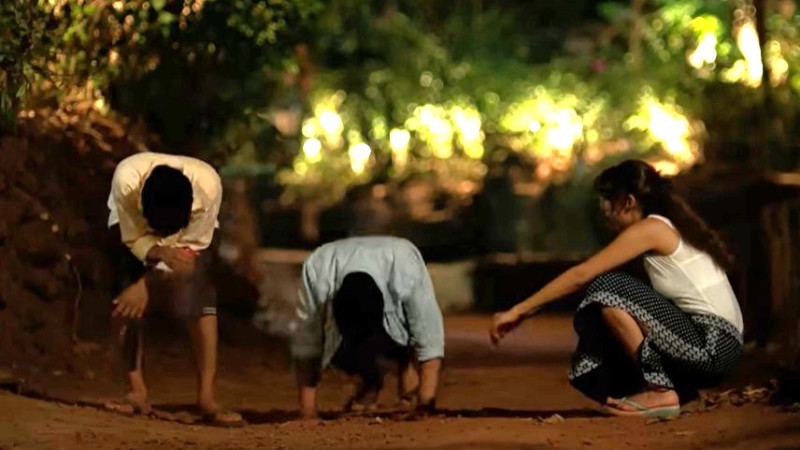
The film doesn’t follow the typical pattern of Act I, Act II, Act III like most mainstream scripts do. Instead, it’s more like flipping through random but connected moments from these characters’ lives. Some scenes are big, some feel small, some feel like nothing’s happening—until later, when it hits you.
Life isn’t always about winners or perfect heroes. It’s actually about the uneasy rhythm ofgrowing up — where ambition limps, dreams collide, and reality bites, where every generation is caught between the old and the new, in a world that seems only half-built for them. The film Teen Payancha Ghoda looks at a generation whose hopes crash into the chaos of change. It’s messy, loud, and heartbreakingly honest. What makes it stand out is not its story, but its raw, unpolished look at youth trying to ride a system that was never really built to carry them.
Set in early 2000s Pune, the film is about three young friends — Adnan, Chandrika, and Rathore — who are figuring out life, love, and survival.
Adnan is stuck repeating his 12th standard exams, under constant pressure from his strict, ex-cop grandfather. Chandrika, his girlfriend, works at a call centre but dreams of making it big as an actress. And then there’s Rathore, their street-smart friend who knows how to forge documents and manipulate systems.
One day, they decide to create a fake mark - sheet to help Adnan pass — just a small fix, nothing major. But that one decision spirals into something much bigger, dragging all three into chaos.
The film explores how their friendship is tested, how the choices they make shape their futures, and how a changing city like Pune leaves behind boys who are still figuring out who they are.
The title itself is rich in semiotics. A horse with three legs? Something is off. Yet the characters still mount it, hoping to ride. This becomes the film’s metaphor for ambition in a broken system:
• Adnan, Chandrika, Rathore are our riders. They’re on that limp horse, and they know it’s flawed - but they go anyway.
• The limp horse - the world of early‑2000s small‑town Pune: half‑modern, half‑stalled. They’re meant to race, but the path is uneven, the tools inadequate.
Teen Payancha Ghoda Official Trailer
NARRATIVE STYLE:
The first 15 minutes of the film make one thing very clear — this is not your typical, straight-line story. It feels more like flipping through pages of a comic book that's alive, filled with energy, colour, and bold choices. And that’s exactly when the film starts to come alive.
This film doesn’t follow the usual story structure with a clear beginning, middle, and end. Instead, it feels like watching three spinning tops — at first they seem out of control, then they move in rhythm, and finally, they come to a sudden stop.
Each character feels like a bigger, louder version of someone we’ve all seen in real life — people who hide their struggles behind jokes and chaos. And the humour in this film isn’t just to make us laugh. It shakes us up. It makes us look closer.
This film doesn’t try to be "polished". In fact, it purposely walks away from clean frames, smooth edits, or tidy arcs.
And that’s the beauty of it.
The direction reminds me of theatre rehearsals: where chaos and energy matter more than precision. There are freeze frames, animated inserts, exaggerated reactions - and all of it feels like the film saying: “Don’t take me too seriously, but don’t ignore me either.”
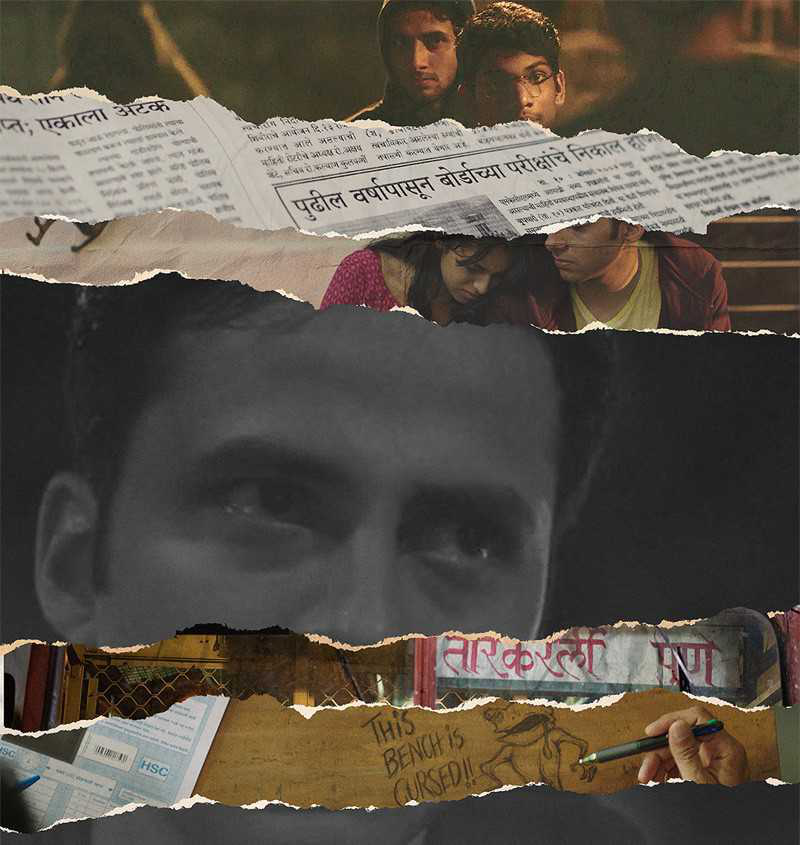 The direction is gutsy. It doesn’t play it safe. The frames aren’t always perfectly straight, and that’s the point — it lets moments breathe instead of chopping everything up. The camerawork makes you feel like you're in the middle of a small-town street, not just watching from the outside.
What really caught my eye was the use of colour and graphics. There’s a strong pop-art vibe — bright colours, sudden flashes, almost like pages from a graphic novel. And the best part? The graphics don’t feel like an afterthought. They’re built into the storytelling.
For someone like me, it’s honestly exciting to see a Marathi film go in this direction — bold, playful, and totally owning its style.
What really stood out for me were the three main characters — Rathore, Chandrika, and Adnan.
Rathore has this quiet change that sneaks up on you. Chandrika is full of spark and energy, while Adnan carries hesitation and doubt. None of them are perfect — they make mistakes, they fall, they try again. The film doesn’t glorify them or make excuses, but it still makes you care about them.
The bigger theme of the film is about the gap between what we dream of and what we actually become. It’s honest about failure. The film reminds us that sometimes the “three-legged horse” we’re riding is broken — yet we still keep racing, convincing ourselves we’ll somehow win.
The film doesn’t follow the typical pattern of Act I, Act II, Act III like most mainstream scripts do. Instead, it’s more like flipping through random but connected moments from these characters’ lives. Some scenes are big, some feel small, some feel like nothing’s happening—until later, when it hits you.
It’s like watching a collage of real people just trying to figure stuff out. Sometimes you’ll watch a scene and think, “Oh man, I know someone exactly like this,” and sometimes it’ll surprise you.
For young filmmakers, that’s actually a goldmine. You don’t always need big plot twists or dramatic turns. Sometimes it’s the quiet moments, the awkward pauses, the little failures, the blurry right-and-wrong decisions—that’s where the real texture of storytelling lives.
You Might Be Interested In : पहिला Sci-Fi हिंदी सिनेमा (कार्गो) बनवण्याच्या जबाबदारीची जाणीव मला होतीच. - Arati Kadav
Teen Payancha Ghoda doesn’t just tell a story—it signals one. The broken horse, the city half‑built, the fake documents, the bright palette—all signs in tension. As a filmmaker, I walked away thinking: this is how you build mood and metaphor without sacrificing character.
You don’t need a huge budget or big stars to make powerful cinema. Sometimes, it’s your style that speaks loudest. The bold colours, the graphic inserts, and the loose structure in this film aren’t just there to look cool—they actually set the mood and say something deeper. And the characters? They aren’t perfect heroes. They mess up, they lie, they fall apart—but that’s what makes them real. As a filmmaker, you don’t have to force goodness to get empathy. And most importantly—own your world. This film treats small-town Pune in 2003 like a living, breathing character. That honesty in time and place is what gives your story the freedom to play with form.
If you’re making films about confusion, growth, small towns, big dreams—study this.
- Sujay Sunil Dahake
Email ID: dahakesujay@gmail.com
(Author is a national-award-winning Marathi filmmaker, known for Shala. Ajoba, Phuntroo, Kesri Shyamchi Aai)
Teen Paayancha Ghoda had received nominations for Best Director and Best Debut Film at the New York Indian Film Festival. It has also been screened at prestigious events such as the Indian Film Festival of Melbourne, Kala Ghoda Arts Film Festival, and the 2025 edition of MAMI Mumbai Film Festival.
Title: Teen Payancha Ghoda (तीन पायांचा घोडा)
Release Date: 7 November 2025
Director: Noopur Bora
Key Cast: Kunal Shukla (Adnan), Ria Nalavade (Chandrika), Avinash Londhe (Rathore)
Genre: Drama / Comedy; youthful, friendship‑driven story/coming-of-age
Produced by: RAHUL DESHPANDE, MUGDHA SHRIKANT DESAI, DARSHAN PRODUCTIONS PVT LTD., ONE FINE DAY, and BHADIPA.
Tags: teen payancha ghoda bharatoy digital party bhadipa rahul deshpande kunal shikla ria nalavde avinash londhe gajanan paranjape sujay sunil dahake marathi film Load More Tags



Add Comment