
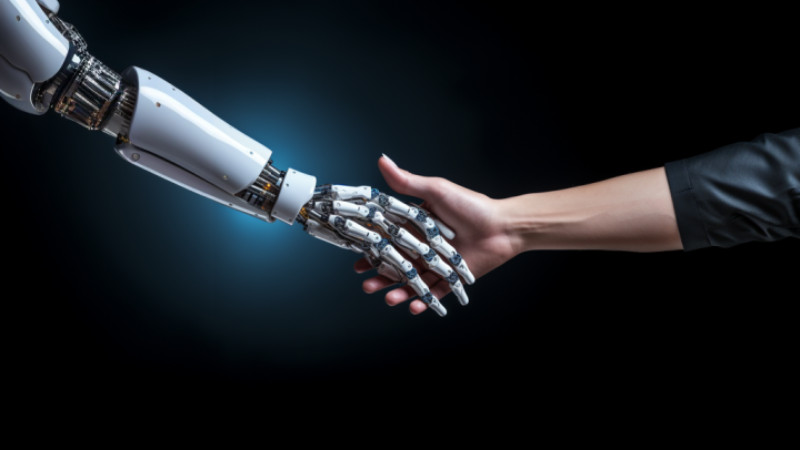
Qualities like rule-following, discipline, unquestioning obedience, and performing the same repetitive job until retirement are losing their relevance. Smart machines, which possess these qualities, are becoming more readily available, faster, more accurate, tireless, strike-free, and increasingly affordable. However, it's crucial to understand the other, more comforting side of automation. Automation's impact reaches a certain boundary, beyond which it creates new service sectors. These sectors demand specific human skills. The broader the reach of automation, the larger the service sector it births, providing more employment opportunities and fostering human capabilities.
In 1977, I completed my undergraduate degree in physics. For my postgraduate studies in the same subject, I moved from Nashik to Pune University. One of my classmates stayed in Nashik for his postgraduate studies. While completing my postgraduate education, I developed an interest in computer programming and learned it as an additional skill in the evenings. At that time, since Pune University did not have a computer, we sent our punch card decks to Tata Institute in Mumbai, where they were run on their computer.
In 1979, I started my career in computer research and teaching, while my friend from Nashik cleared bank exams and took a job in Mumbai. During that time, computers were slowly and discreetly being introduced in banks. Whenever my friend and I met in Nashik, Pune, or Mumbai, the topic of computers always came up. I would passionately talk about the benefits and new uses of computerization, often getting carried away without realizing if my friend was interested or not.
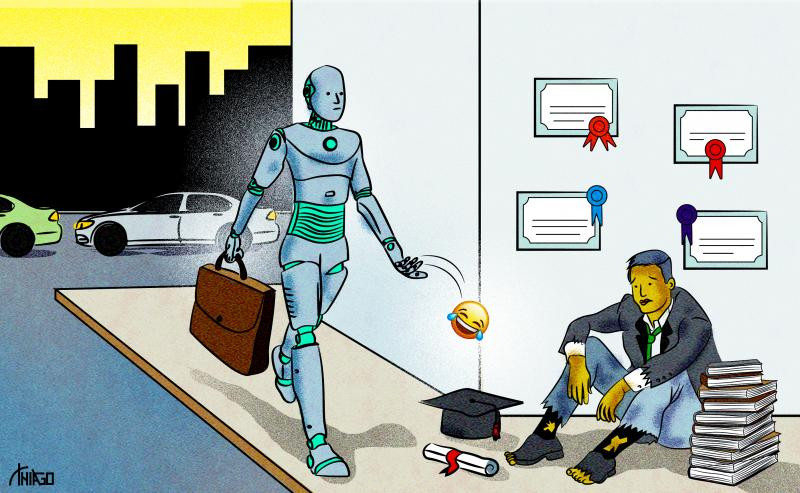 Over time, I noticed from his conversations that his union had convinced him that computerization would lead to unemployment. While PCs were becoming more common, my friend had become entirely opposed to computers. In one of our meetings, he asked me, “What does a computer look like?” This question excited me, thinking he had finally changed his mind. I started explaining how a computer works in detail. He interrupted me, saying, “I’m not interested in how it works, just what it looks like.”
I was a bit confused, so I asked him why he wanted to know. He told me he wanted to make a replica of a computer out of thermocol to burn it in an anti-computerization protest organized by his union. I was stunned. Despite my explanations of the benefits, he remained against computers.
As history unfolded, we know that despite resistance from unions, computerization in the Indian banking sector progressed, albeit slowly. Today, even rural cooperative banks offer ATM services. Computerization has made banking services accessible to millions, including direct benefit transfers for schemes like the Mahatma Gandhi National Rural Employment Guarantee Act (MGNREGA). Even with extensive computerization, there remains a huge demand for young professionals in the Indian banking sector. So, where did the feared unemployment axe from computerization go? Let’s understand this better
In reality, computerization helps people escape monotonous, repetitive, and intellectually unstimulating tasks, allowing them to engage in more creative, value adding work. However, my friend and his union believed, like many at the time, that this new technology would lead to widespread unemployment. We must recognize a historical inevitability here: the broad automation enabled by computers and smart machines is a megatrend of our time.
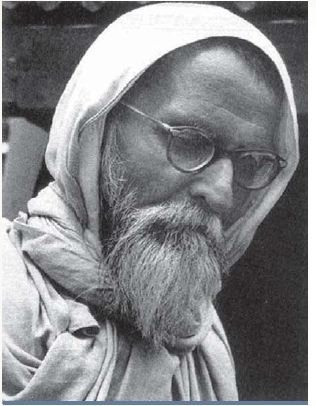 Acharya Vinoba Bhave referred to such megatrends as 'Yugadharma' (the defining spirit of an era). There are multiple reasons why the megatrends emerge, but let's not get into all that for now. These trends develop over decades and become unstoppable once they gain momentum. Computers, the internet, email, mobile phones, SMS, WhatsApp, and other new smart systems are such megatrends.
The widespread use of modern information technology has led to significant megatrends: digitization, mobilization (working on the go), virtualization, personalization, social mediation, and self-organization of groups. Rather than opposing these megatrends, it is wiser and more pragmatic to harness them for development. It is crucial to ensure that even the lowest societal levels benefit from these trends to speed up their progress. Additionally, care must be taken to prevent these trends from creating new inequalities.
The youth, who adapt quickly to these megatrends, have a social responsibility. For example, the rapid spread of mobile phones, email, SMS, and WhatsApp has rendered many postal and courier jobs obsolete. Instead of dwelling on job losses, the focus should be on enabling the youth to create new meaningful careers using these technologies.
This approach is more responsible and sensible, ensuring that society moves forward inclusively and benefits from the opportunities provided by modern information technology.
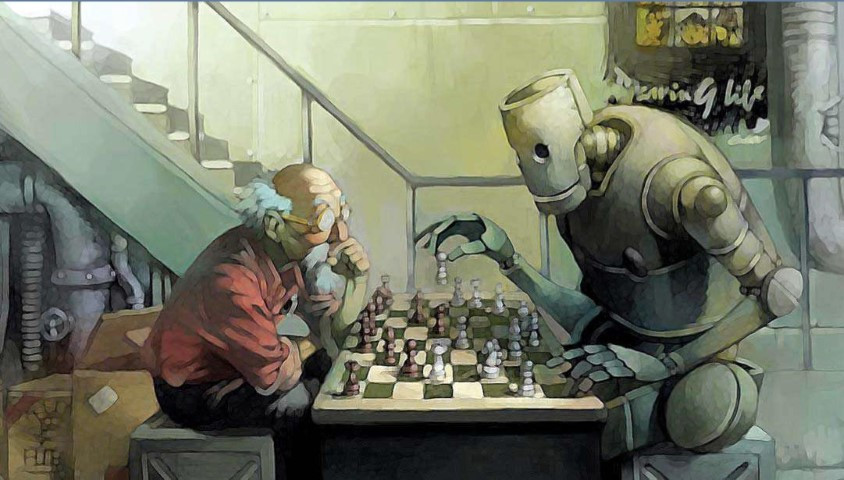
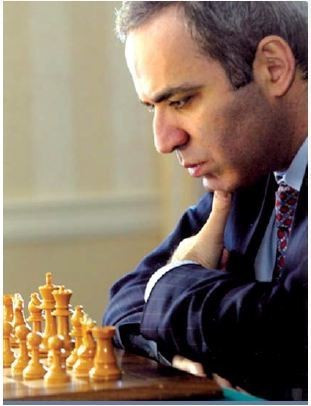 The history of automation shows that mechanical or rule-based tasks are inevitably taken over by mechanization, computerization, or automation. This trend renders people who insist on manually performing these mechanical tasks or who cannot adapt to new circumstances unemployed. Skills like proficiency in chess, which involve rule-based logical operations, will lose their significance because computers can perform these objective logical actions much faster and more accurately than humans. For example, it is well-known that computers have been consistently defeating grandmasters like Garry Kasparov in chess for several years.
Qualities like rule-following, discipline, unquestioning obedience, and performing the same repetitive job until retirement are losing their relevance. Smart machines, which possess these qualities, are becoming more readily available, faster, more accurate, tireless, strike-free, and increasingly affordable. However, it's crucial to understand the other, more comforting side of automation. Automation's impact reaches a certain boundary, beyond which it creates new service sectors. These sectors demand specific human skills. The broader the reach of automation, the larger the service sector it births, providing more employment opportunities and fostering human capabilities.
For instance, in the banking sector, effective automation hasn't led to widespread unemployment but a shortage of millions of workers. In automation-driven service sectors, there's a growing demand for pure human abilities, offering innovative job opportunities to those ready to learn new skills. These job sectors and roles didn't exist before the advent of specific automation. Thus, automation, while transforming old jobs, simultaneously creates new, skill-demanding roles, highlighting the importance of adaptability and continuous learning.
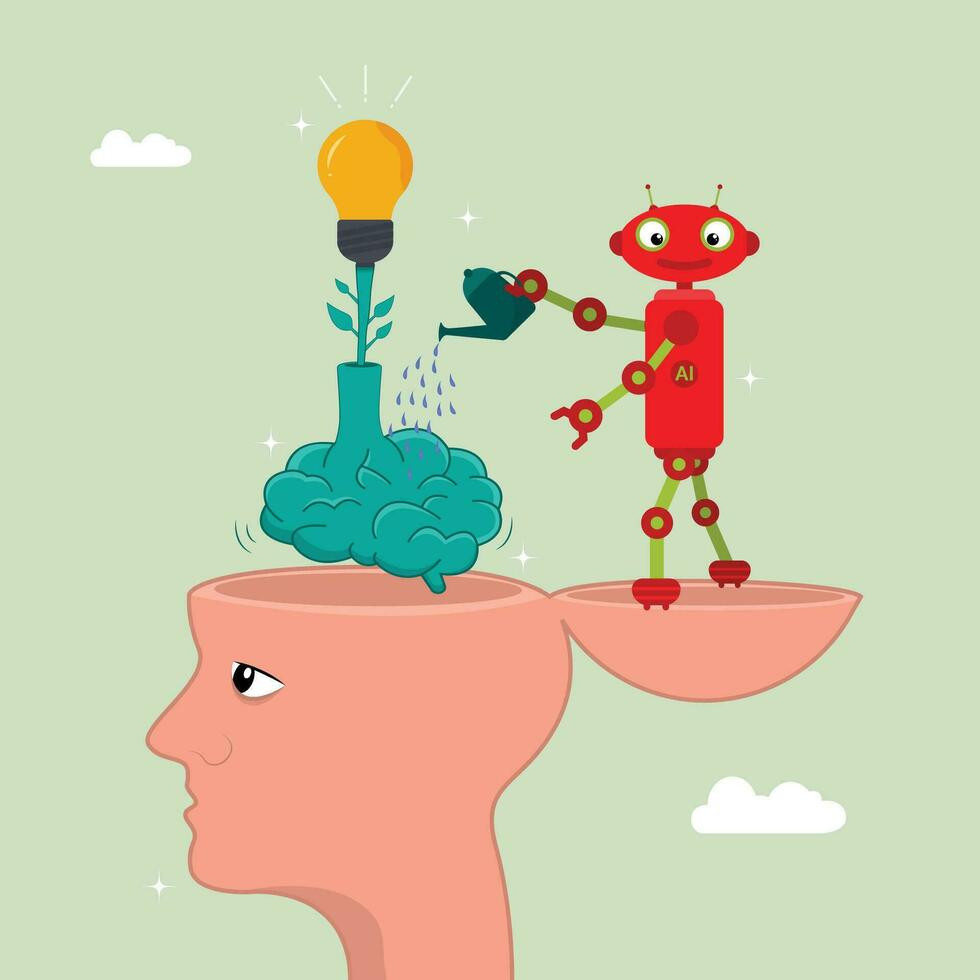 In these service sectors, creativity is valued over routine, innovation over repetition, and personalization over objectivity. Soft skills, such as emotional intelligence and interpersonal relationships, become essential. In banking, traditional tasks have been automated, but this has created new jobs requiring unique human skills. These include implementing and improving computerization, training staff, enhancing ATM features, maintaining machines, installing security systems, designing and marketing new banking products, understanding and resolving customer issues, conducting IT audits, analyzing data to prevent defaults, and balancing customer interests with bank profitability. This shift highlights the importance of nurturing human intelligence and creativity.
If only my friend and his union had embraced the megatrends of three decades ago with foresight, the transformation towards computerization would not have led to his untimely “voluntary” retirement, but to a more creative and insightful second inning in his career. Instead of sticking adamantly to the misguided aversion to computers, had he and many like him opted for getting trained in important and specifically human tasks for the new environment, and delivering high quality results by combining their domain knowledge and experience with new skills, their careers would have skyrocketed, and not just that, the benefits of banking would have reached millions of people much sooner.
The aggressive proliferation of smart machines, smart systems, and robots in everyday life is no longer limited to the developed countries, but it is evident everywhere. The domains affected include autonomous farming, self-managed factories, automatic home appliances, and automated service providing. Driverless Cars, combat robots on battlefields, or robots skillfully making multilayered Chapatis are no longer futuristic conveniences. Smart systems are rapidly taking over many household chores, their mindful breakdowns and alarms, security and continuous monitoring of homes, offices, factories, warehouses, vehicles and road traffic etc.
Companies like Amazon are contemplating employing humanless robotic vehicles for doorstep deliveries. Over the past few years, the deployment of smart machines and systems such as 'Da Vinci' in complicated surgical procedures involving the eyes, brain or heart has gained popularity, with continual enhancements. Moreover, in order to maintain competitiveness, diverse manufacturers are consistently reducing the cost of such devices.
On one hand, capabilities of computerized systems are rapidly increasing and on the other, various types of smart sensors that accord perceptive powers of sight, sound, touch, and smell to smart machines are also advancing swiftly. At this rate, our civilization is likely to be recognized as the automated or the programmable (!) or the software civilization.
Some of us are bound to wonder if the service sector, which at present demands specialized human capabilities, would also be taken over by automation in the future? The answer is that services that humans start providing with mindless monotonous repetition will be automated by robots and computers. For example, call center agents follow rules and regulations strictly and bore customers with mechanical, machine-like responses, that will become completely robotic and will not be able to adapt flexibly to the individuality of nearby customers. But wherever there remains a distinctively human capability at the center of providing such services, automation may not always be feasible. We need to understand those dynamics and their underlying logic. Only then will we know how the ingenious machines that inevitably continue to advance will not remain adversaries or competitors but rather become companions or partners.
During the latter half of the twentieth century, some scientists dreamed of developing Artificial Intelligence and making it perform not just repetitive tasks but complex, intricate and innovative ones like creating poetry, directing a film, so on and so forth. They colored the world with sensational imagination. Countless people were captivated by those tall claims. Those dreams sparked endless discussions, earning them immense fame. Extensive research ensued, vast resources and numerous experts were invested over decades. In the first twenty years, we’d achieve this, then in the next thirty, that - it was said. But in reality, so far, most of it has been proven impossible.
Through factory-like systems born from the Industrial Revolution, the twentieth century succeeded in making humans more machine-like; however, it (thankfully!) failed in endowing machines with pure human capabilities! There were several technological reasons why artificial intelligence research proved futile at that time. Firstly, the immense computational capacity required for creating artificial intelligence was not available then and still isn't today. Secondly, the complexity of human intelligence could not be replicated with the programming methods known at the time, and it remains elusive even now. The most important third reason is that the nature of human intelligence, which we hadn't fully understood then and still don't entirely grasp today, was assumed to align with the artificial intelligence we were creating—a fundamentally flawed assumption!
Humans are creatures with minds. They have emotions and the sensitivity to understand others' feelings. Humans can create symbols and language and communicate meaningfully with each other, enabling collective actions through dialogue. They possess inner motivation, willpower, and courage, along with the capacity to make decisions and act upon them. Humans can contextually interpret sensations from their sensory organs, derive meaning, and make inferences. They possess intellect, creativity, and the ability to solve complex problems. Humans can question and think, harbor doubts, learn, and assimilate knowledge from previous generations to create new knowledge.
Humans can think in extremely complex, expansive, and limitless ways, construct cognitive frameworks, and reflect objectively on their thought processes, engaging in intricate arguments. They can have subjective experiences and independently respond to external stimuli, maintaining the freedom of choice in their responses. Humans can express themselves independently and meaningfully, create new things, dream, imagine, and indulge in uninterrupted flights of fancy. They can create abstract thoughts and ideas, explore the unknown and the marvelous, reason, make conjectures, formulate and conduct experiments, make observations, draw conclusions, infer, propose theorems, and prove or disprove them. They can discover general rules from specific realities and make new discoveries.
 Human intelligence is capable of coordination, synthesizing different concepts to create new ones. Humans possess various qualities such as understanding, comprehension, wisdom, prudence, and a sense of humor. Because human intellectual activities are subjective, they are not programmable, and their outcomes can be unexpected. It's impossible to predict accurately what will result from these activities in advance. This becomes evident when different individuals provide varied answers to the same open-ended question. Humans can make mistakes and experience forgetfulness.
No matter how complex a computer may be, it does not possess these extraordinary qualities of human intelligence. Therefore, computers cannot replicate human intelligence. However, a qualitatively different form of intelligence—'non-human' or 'inhuman' (not inhumane!)—is gradually developing in computers. It is termed 'non-human' because the complex behaviors or solutions to intricate problems exhibited by computers are not easily understandable or analyzable by human intelligence. This is because humans have only taught computers the basic algorithms for self-correction and self-improvement processes.
The answers that computers derive from performing billions of iterations of such self-corrections and self-improvements on vast amounts of data in a fraction of a second are already astonishing to us today. For instance, the Google search engine, which provides millions of precise results in an instant to millions of users every day, is just the dawn of non-human intelligence. Each time a new search is made, this search engine (software) continuously improves its accuracy and speed from past experiences using the techniques initially taught to it, making it more advanced and faster.
Although computers, with their non-human intelligence, cannot produce new creative ideas stemming from human inspiration or think as broadly and limitlessly as human intelligence, they can process given information in a much deeper and more objective manner than humans. They can analyze vast amounts of data in an instant, conduct intricate causal analyses (complex processes), uncover underlying patterns in extensive datasets, and prompt humans to think in novel ways that they might not have considered.
Moreover, while performing these tasks, computers can become self-improving (automated) and continue to ‘learn’. Humans, who have emotions and subjective responses, and who make different subjective choices based on their moods even when faced with the same facts, process information much slower than computers. The advanced, in-depth, objective, complex, and self-improving behavior of computers is beyond the capacity of humans to emulate past a certain limit. The primary reason for this is that human intelligence, being fundamentally subjective, cannot be automated like non-human intelligence, not even by the individual possessing it.
Therefore, a person aware of their limitations (or strengths) and newly aware of what needs to be done to solve complex problems is now developing non-human intelligence in computers that is not just supplementary to human intelligence but complementary to it. Computers are becoming so proficient in self-improvement that their advanced problem-solving behavior will be something humans cannot replicate. Often, this behavior will be so effective that it will even astonish the humans who initially imparted the self-improvement skills to the computers.
Read Also: ज्ञानाधिष्ठित समाजनिर्मितीच्या स्वप्नाचा पाठपुरावा by the same author
The success of developing non-human intelligence mentioned above and the failure of developing artificial (human intelligence-imitating) intelligence have resulted in a change in the direction of mechanical intelligence development. Instead of imitating human intelligence, the development of this artificial intelligence has started focusing on what human intelligence cannot do. For this, self-learning software is created by humans, and as this software is used, it continues to improve itself (to solve problems more efficiently) and create its next generations. Just like a Japanese sickle that sharpens itself while harvesting rice crops, it’s the same kind of scenario.
Over time, it becomes impossible to find a similarity between the forms of these next generations and the form of the human intelligence that initiated them. Such intelligence is then referred to as non-human intelligence. This intelligence is used for highly intellectual tasks like quickly and precisely extracting millions of accurate results from a vast web of information through complex Google searches, accurately transcribing mobile conversations in various languages, instantly translating them into other languages almost accurately, and presenting them in the desired accent (male or female voice).
 The next type is software that takes commands in a human voice and natural language and performs tasks accurately as per those commands. When given raw video and photo materials, this new intelligent software creates high-quality videos by adding suitable background music that matches the emotional context, inferring the original storyline from the given materials (with supporting animation and special effects), and producing them instantly. For example, if the raw photos or videos are related to travel, this software connects them permanently to Google Maps, providing users with a ready video that updates itself automatically with geographical details that change over time.
By deeply searching through vast repositories of data not only in numbers and letters but also in images, sounds, and moving pictures, this unique intelligence can uncover astonishingly complex and novel correlations, trends, interpretations, predictions, forecasts, patterns, and insights within the data—ones that even experts in the field might not have noticed despite thorough consideration. These software systems are bringing forth these profound connections and abstract concepts instantaneously before experts, leading to fundamental changes in planning and decision-making processes.
For example, predicting which methods specific taxpayers or delinquents might use to evade taxes in the future by analyzing extensive economic transaction data, forecasting national economic trends, predicting the spread of pandemics—where, when, and to what extent they might occur, estimating population, employment, and capital migration, forecasting market fluctuations, predicting potential tsunamis following earthquakes, and anticipating climate changes.
The future holds many potential applications for non-human intelligence. For instance, creating virtual reality that appears more real than actual reality (virtual reality that seems more real than real reality!), effectively utilizing such virtual reality for e-learning, e-governance, and e-commerce, generating unprecedented special effects for films, developing highly specialized robots (e.g., for rescue operations in radioactive accidents, building houses with safe and suitable internal environments on Mars before starting human settlements), creating new preventive medicines, developing a single comprehensive vaccine for all infectious diseases in infants, conducting experiments on the creation of life from new proteins, discovering new drugs for incurable diseases through genetic analysis, managing the vast international repositories of genomic sequences doubling every month, understanding the human brain (using non-human intelligence to comprehend human intelligence), controlling epidemics with the help of wirelessly communicating nano-sensors spread across the city in the form of smart dust, and using similar sensors along with non-human intelligence for the online protection and management of natural ecosystems, climates, and oceans from illegal human interventions, etc.
The 20th century's industrial revolution successfully mechanized human labor, and attempts were made to replicate human intelligence through artificial intelligence. However, the 21st century has provided us with a more suitable direction: let machines perform tasks they excel at, and humans focus on what only they can do. Human and machine capabilities are fundamentally different but complementary, fostering a successful, sustainable partnership between human and non-human intelligence for the benefit of society and the environment.
This partnership will be characterized by human intelligence continuously delegating non-intrinsic tasks to non-human intelligence, further enhancing it. If humans continue to perform non-essential tasks, non-human intelligence will inevitably assume those roles, challenging humans to reach the pinnacle of their inherent creativity.
Albert Einstein's statement aptly captures this: "Humans are astonishingly slow, error-prone, but intelligent. Computers are astonishingly fast, accurate, but unintelligent. Together, they can achieve remarkable things!" This insight reflects the future trajectory of human-computer collaboration.
From this discussion, it's evident that to navigate and lead in this new world, our children's education should focus on developing pure creative human capacities rather than rote learning and parroting. Instead of reducing humans to mere note-printing machines, it is crucial and feasible to mold them into more complete, creative, and cultured beings who can collaborate effectively with advanced machinery. This should now be the contemporary goal of education.
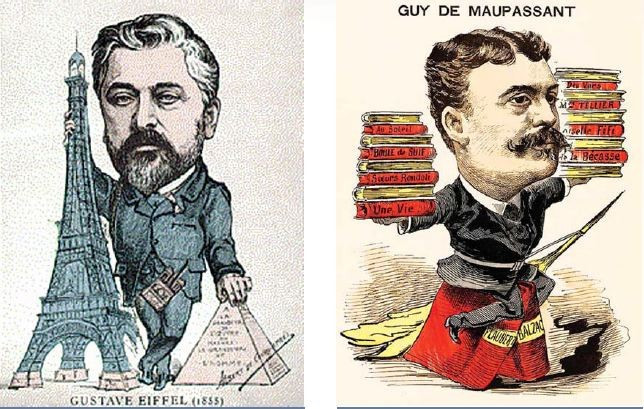 To illustrate this partnership, consider the story of Gustave Eiffel and the Eiffel Tower. While constructing the tower for a trade fair, Eiffel faced significant opposition from Parisians, including the famous French novelist Guy de Maupassant, who regularly criticized the tower. But later after the tower was completed, despite his opposition, Maupassant would visit the Eiffel Tower every single day, climb all the way up to the Eiffel Tower's café (elevators were not invented yet, mind you!), and write against it from the very place he detested. When someone called him out about that, he would say, “It’s because the Eiffel Tower is the only place left in Paris from where I can enjoy the panorama of my beloved Paris, unmarred by the distasteful Eiffel Tower.”
Exactly like that, the happy irony is, the human society will be able to appreciate the ingenuity, clarity and perfectness of pure human intelligence only from the high tower of non-human intelligence.
Vivek Sawant
mentor@mkcl.org
Chief Mentor at Maharashtra Knowledge Corporation Limited (MKCL)
Translated by Rucha Mulay
kartavyasadhana@gmail.com
Read Original Marathi Article From Sadhana Yuva Diwali Special Edition 2015 Here
Tags:Load More Tags























Add Comment