
While the swing to the Right was taking place in India since the mid-1970s, 1991 marks the complete switch with post-Independence policy making. A new paradigm took hold under pressure of conditionalities imposed in 1991. One of IMF’s conditionalities is to approach the World Bank which requires the country to go for Structural Adjustment. That is, the economy has to be in tune with requirements of the advanced country’s MNCs which dominate globally. The World Bank pushes their interest on to the nations asking for adjustment.
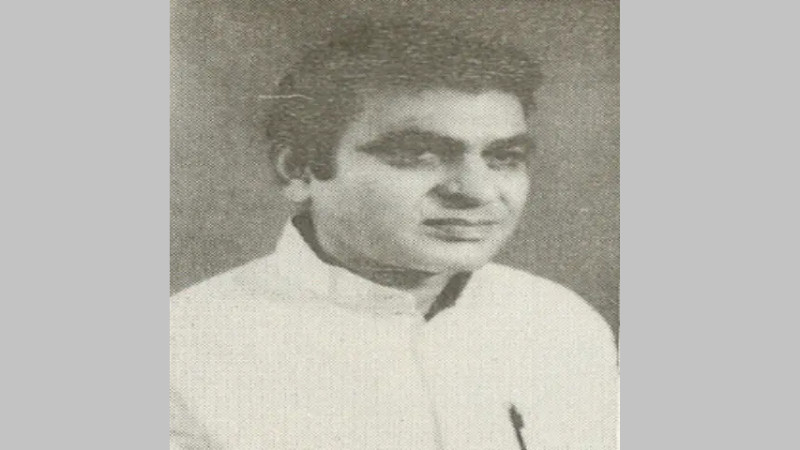
Homage to the Shri Varde: A Multifaceted Personality
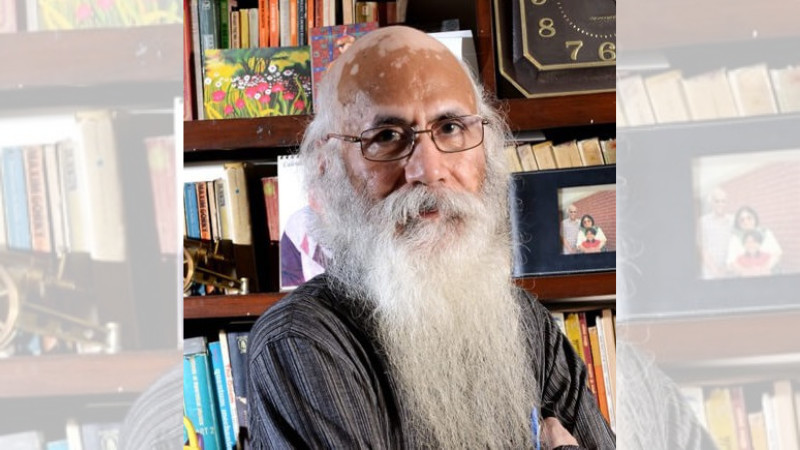
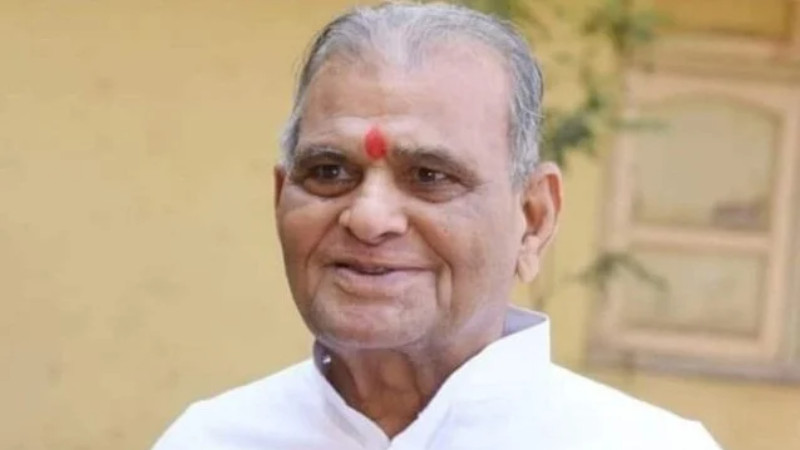
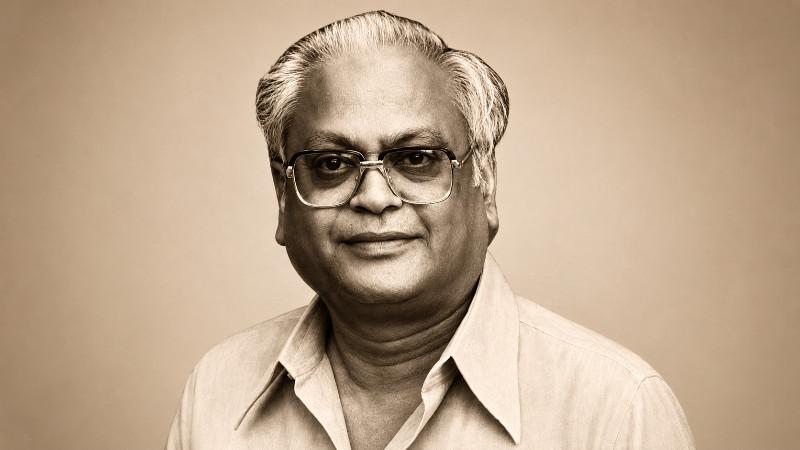
I am honoured to be asked to deliver the Sadanand Verde Memorial during the Centenary year. He was a multifaceted figure – politician, educationist, activist and someone who empathized with the Antim Vyakti. Born on 6th November 1925, he passed away on 29th January 2007 and achieved much during his lifetime.
He was a Gandhian Socialist who joined the Rashtra Seva Dal (RSD) and participated in the freedom struggle from an early age. He obtained a Masters in economics and taught in National College till 1978. He continued his political and social work all through. During the Emergency he was in jail for 18 months. He became the minister for education, sports and cultural affairs, in the Govt. of Maharashtra, in July 1978. Earlier he had been a Councilor of the Bombay Municipal Corporation and later he was a member of the Legislative Council of Maharashtra.
He was on the editorial board of the Marathi weekly Sadhana and made important contributions to public opinion. He was an institution builder. Notably, after the devastating earthquake of Latur, he initiated action for the setting up of an orphanage called Aple Ghar (our home) and the school Dharitri Vidyalay.
Introduction: Promises Made at Independence
Independence in 1947 came with great hope, poignantly expressed by Nehru in his midnight speech as ‘Tryst with Destiny’. That night, political power shifted from a foreign hand to Indian nationalists - the freedom fighters. Nehru gave a blueprint for independent India. He said, “A moment comes, which comes but rarely in history, when we step out from the old to the new, when an age ends, and when the soul of a nation, long suppressed, finds utterance.” And, “To bring freedom and opportunity to the common man, to the peasants and workers of India; to fight and end poverty and ignorance and disease; to build up a prosperous, democratic and progressive nation, and to create social, economic and political institutions which will ensure justice and fullness of life to every man and woman.”
India has no doubt progressed materially but strayed far from the lofty political and social ideals set out by Nehru. Even in economic terms, India has been left far behind by some nations that also attained freedom from colonial rule around 1947 - namely, China, South Korea and the South East Asian nations.
Nehru hoped we would “...redeem our pledge, not wholly or in full measure, but very substantially.” But we have fallen short because “...The past clings on to us still in some measure and we have to do much before we redeem the pledges … .”
Nehru had exhorted, “...All of us, to whatever religion we may belong, are equally the children of India with equal rights, privileges and obligations. We cannot encourage communalism or narrow-mindedness, for no nation can be great whose people are narrow in thought or in action.”
Where have we gone wrong? This lecture tries to trace the origins of Independent India’s failures which are due to developments since Independence both at the national and international levels.
Post Second World War Capitalist Development
India got freedom after the Second World War ended. The victorious powers decided at Bretton Woods decided in 1944, how they would govern the world and dominate it in spite of the end of colonial rule. They were confronted by the rising ideological challenge of Soviet Union offering an alternative to the capitalist path of development. The colonized nations gaining independence then faced a dilemma. They were naturally suspicious of the colonial powers and yet they were dependent on them economically and politically. The Soviets could not supplant the western colonial powers but did offer some degree of autonomy.
The Cold War that ensued, enabled the developing world to obtain better terms from the Western powers which did not want to alienate them lest they moved closer to the Soviets. But the ruling elite in the developing world which came to power after attaining Independence had a symbiotic relationship with the colonial rulers. Their framework was attuned to the colonial masters. To them ‘progress’ meant copying ‘Western modernity’. The elites were wary of the Soviet idea of socialism and equity in society which would have slowed down their own development and delayed their becoming like the Western elite.
The Western powers created the two institutions – IMF and World Bank - to enable them to dominate, global finance and economic development. GATT for trade in industrial goods was set up as the third arm in 1948. Thus, the direct control of the colonies was replaced by an arms-length approach via these institutions thereby creating an impression of fairness and multilateralism. These institutions served the interest of the former colonizers by imposing conditionalities on the countries facing challenges and asking for assistance from these institutions.
Given the under development of the newly independent nations and the rapaciousness of their ruling elites, these nations repeatedly faced problems and needed assistance from the Bretton Woods institutions. This enabled the capitalist world to control the economic direction followed by the developing world and preventing them from drawing closer to the Soviets.
Thus, the developing world which as colonized nations had been a part of the capitalist world order continued post-Independence to follow the capitalist path set for them by the advanced capitalist countries. Though in a changed form.
Capitalism also learnt an important lesson during the depression of 1920-30. It goes through business cycles due to shortage of demand. It was found that government intervention is required to boost demand. One way was to build infrastructure, as happened in the US through the New Deal in 1933. Another was the creation of a welfare state to take care of the marginalized in society and generate demand. Thus, the hard face of capitalism turned into a soft face.
Inclusive policies were found to be essential for the survival of capitalism. Labour rights were recognized. This also helped counter the threat of spread of communism in the world. Because it presented a face of capitalism that also cared about the marginalized sections. Henry Ford said in 1911, why produce lots of cars if my workers cannot buy them. The developing world was offered Aid to overcome their under development. This seemed benevolent even though it was designed to capture the markets of the developing world and influence policies of the developing countries.
India’s Top-Down Development Strategy
Indian leadership emerging from the national movement was opposed to the British but was trained in UK or largely under their hegemony. It wanted India to adopt Western modernity on attaining Independence. Only Gandhi wanted India to work out an Indian modernity. In ‘Hind Swaraj’, Gandhi’s manifesto for independent India, he called Western modernity ‘evil’. In ‘India of my Dreams’, he said India was the only country capable of giving an alternative to Western Modernity. But, the Congress Party did not accept this.
The dominant leadership of Congress saw two paths of Western development even before independence was achieved - the Soviet path of Centrally Planned economy and Free Market economy of the advanced capitalist economies. So, after independence, the leadership adopted this mixed economy path with a public sector and a dominant private sector along with Central Planning for optimal use of resources.
Both these were paths of top down development. Lewis model came in handy for this approach. The model suggested that the advanced sector would expand and absorb the backward sector thereby developing the economy. This trickle down approach did not deliver in India. This was a model of European development of the 1830s which was not applicable to the very backward Indian economy of 1950s when the gap between the advanced and backward sectors was enormous, unlike in Europe of 1830s. Also, the conditions were vastly different in 1830s. Europe had colonies to extract surplus from, for its capital formation and it could send excess labour to the colonies and the rapidly expanding America. None of these were available to India that was weighed down by poverty, illiteracy, etc., due to the colonial rule.
One favourable factor was the sensitization of the leadership emerging from the freedom movement that the cause of India’s impoverishment was colonial exploitation and not the fault of the people of India.
So, in 1947 the policy paradigm was based on the idea that ‘individuals are not to blame for their problems’ of poverty, illiteracy, ill-health, etc. Since these problems are systemic, they have to be tackled collectively by society. The only collective entity available was the state. So, it was given the large role of taking care of the problems of the individual – poverty, employment, education, health, etc.
 This also gelled with the idea of a welfare state that was in vogue in the advanced countries.
So, while resources were allotted to education, health etc., and there was an improvement in these parameters, resources were focused on modernization of India along Western lines. The marginalized sections having faith in the leadership accepted the trickle down approach, believing that things would improve for them in the future.
Since policies were not based on the Indian reality, the economy went from crisis to crisis. No doubt there were other contributing factors also, like the wars with China and Pakistan and the pressures of Cold War.
Above all, there was the breakdown of consensus over policies among the ruling elite. They were opposed to the austerity that a poor country required to channel all resources to development rather than consumption. They were impatient to catch up with the Western nations and wanted to live like them. This resulted in growing illegality and growth of the black economy which caused policy failure, social waste and flight of capital from India. A poor nation was exporting capital.
These discredited the dual economy model in which the public sector was playing the leading role. The private sector always saw the public sector as a threat to it. If it was successful, then there would be demand for nationalization. An unsuccessful public sector is the best defence against nationalization of the private sector.
The economy faced challenge after challenge. 1950s experienced the balance of payment crisis as investment went into modernization and consumption increased. This led to the start of import substitution. The 1960s experienced the food crisis as agriculture failed due to a severe drought. India had to import food from the USA. This was used to pressurize India to substantially devalue the rupee. Planning was suspended for three years in 1967 and after that it never recovered its original conception of ex-ante planning. The 1970s saw the spike in inflation, the Emergency and the start of dismantling of the public sector. From the mid-1970s, India started to drift to the Right in economic, social and political terms.
The Emergency in 1975, saw policy making slip into the hands of rightwing. Authoritarianism suppressed dissent. Key personnel in economic policy making were brought from the IMF and the World Bank. A revolving door was setup for people from these agencies to join the government and return. So, policies increasingly followed the diktats of the World Bank, IMF and other such institutions of global governance based in Washington. Later on this was characterized as the Washington Consensus.
India was becoming more and more capital and energy intensive so the sharp rise in crude oil prices led to high inflation and a BOP crisis at the start of 1980s. India was forced to approach the IMF for adjustment. IMF’s help comes with conditionalities and India had to agree to open its markets. The advisors from World Bank in policy making positions argued that India should import more. They argued that exports would also rise and cover the outgo on imports. That initiated consumerism in India – the restraint on luxury consumption ended and consumption of white goods and automobiles increased based on imports. Foreign debt increased dramatically during the 1980s from $10 billion to $90 billion.
In the late 1980s as soon as the crude prices rose again due to war in West Asia, Indian economy had its most severe BOP crisis. It was on the verge of default on repayment of foreign loans and had to use gold as collateral. The rightward drift in India was accentuated by global strategic changes.
Global Strategic Shifts since 1970s
Mid-1970s onward, strategic changes took place globally with the decline of the Soviet Union and 180 degree turn in China after Mao’s death. The alternative to exploitation of the developing world by the advanced capitalist countries started to fray. International Finance Capital became more and more dominant in international economic matters via its instrumentalities World Bank, IMF and GATT which became WTO after 1995.
Since the 1970s, the advanced countries were facing stagflation. For their growth, they wanted to capture the markets of the developing world via opening up of their economies. The raw face of capitalism began to be more evident with the global swing to the Right. Aid to the developing world was replaced by capital flows. To attract which the developing nations had to give concessions to capital. One of these was to curtail labour rights which were granted after the Second World War.
Margaret Thatcher became England’s PM in 1978 and attacked labour arguing that ‘there is no alternative’ (TINA). Ronald Reagan became the President of USA in 1980 and strongly pushed these rightwing policies. The US ambassador to GATT told the Indian ambassador in 1982, that the Soviets cannot help now so USA will get your markets opened up, especially agriculture. In the Uruguay Round of negotiations of GATT in 1987, in Puenta del Este, all the new trade issues were introduced – trade in agriculture and in services, TRIPS, TRIMS, creation of WTO, etc. The idea was to get the developing world markets opened up for exploitation by the advanced countries via their MNCs.
But this was also not a solution to the shortage of demand faced by the advanced countries. So, the World Bank started to propose ‘safety nets’ in the mid-1980s. It was accepted that the proposed policies based on marketization would lead to the marginalization of the marginals. So, it was a partial and temporary solution only. India came under the grip of Washington Consensus in the 1980s. The climate for this was created by the World Bank financed studies and holding of international conferences which all pushed the marketization of the economy and its opening up. They enticed the Indian intellectuals into accepting it as the solution for India’s economic woes. This led to a paradigm change in India’s policy making in 1991.
Paradigm Change 1991: Marketization
While the swing to the Right was taking place in India since the mid-1970s, 1991 marks the complete switch with post-Independence policy making. A new paradigm took hold under pressure of conditionalities imposed in 1991. One of IMF’s conditionalities is to approach the World Bank which requires the country to go for Structural Adjustment. That is, the economy has to be in tune with requirements of the advanced country’s MNCs which dominate globally. The World Bank pushes their interest on to the nations asking for adjustment.
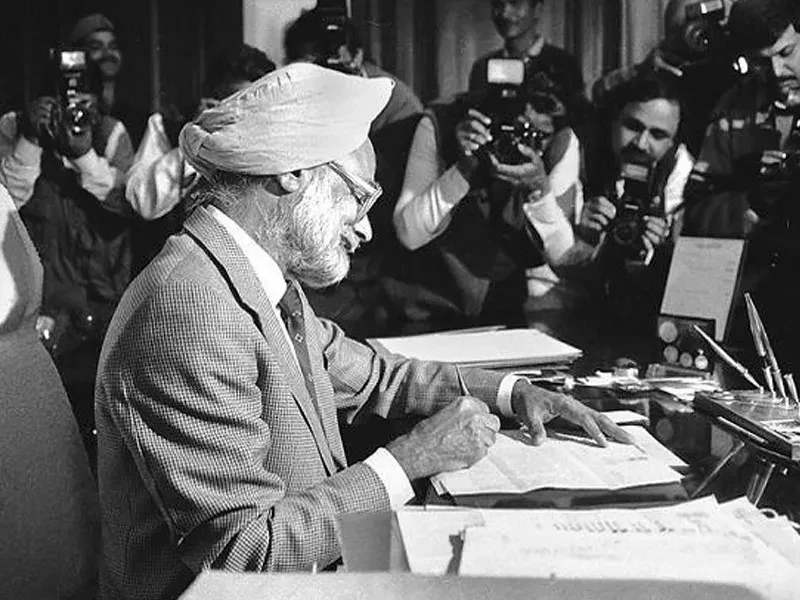 In other words, nations have to accept a truncation of their sovereignty and cannot make policies only on the basis of what it requires. For instance, India policy making could not focus only on the needs of the marginalized sections and had to go for pro-business policies. Public sector as the leading sector had to give way to the private sector. Privatization and disinvestment were used to reduce the size of the public sector. Welfare policies had to be pruned in favour of the private sector.
The paradigm shift implied that the collective (government) is no more responsible for taking care of the individual’s problems. The individuals need to go to the market, to solve their problems, of poverty, unemployment, illiteracy, etc. This is marketization. It is not that markets did not exist earlier but marketization implies the penetration of market principles into social institutions. And, creation if markets where they did not exist. For instance, air, water, rivers, forests and coastal regions came under the sway of markets. This may be characterized as the marketization phase of globalization.
With the penetration of market principles into institutions, a philosophical change has occurred in society. This is visible globally.
Principles of Marketization
Markets work on the ‘dollar vote’ and not on the democratic principle of ‘one person one vote’. So, democracy has weakened and those who are marginal to the market are further marginalized. This is the ‘marginalization of the marginal’, internationally, nationally and regionally and has resulted in growing inequality globally and within nations between capital and labour and the marginals and the well-off.
People are turning into ‘Homoeconomicus’ - only economics matters and not the political, social and historical aspects of society. In economic terms people are taken to be ‘rational’ and following ‘profit maximization’. Profits maybe earned by any means – legal or illegal. Smuggling leads to efficiency and is justified as welfare enhancing. Maximization implies balancing of benefit and costs. Like, tax evasion being optimized. So, right and wrong co-exist and there are no absolutes in society. Greed has always existed but was frowned upon earlier. But it is raised to a new high pedestal and is celebrated. Fooling people is cleverness.
Consumers are taken to be ‘sovereign’ and government should not intervene in their choices. Society is taken to be subjective while market outcomes are defined as objective. So the former should retreat and the latter should prevail enabling the individual to do what they would like to do, whether right or wrong. Morality is socially defined but that comes in the way of individual’s profit maximization. So, amorality is promoted in the name of objectivity. People hesitate to take a stand on social matters lest it become paternalistic.
As society retreats, atomization grows. Collective action becomes increasingly difficult. This suits capitalism. Trade unions have declined. As labour aristocracy grows, many workers think of themselves as managers. They become partners of capitalists rather than think of themselves as workers in conflict with capital. They no believe in ‘nothing to lose but their chains’.
In the marketized world, workers are consumers increasing their consumption without limits. This is ‘consumerism’ – consumption for the sake of consumption. It has become the new opium of the masses. This pushes the real issues facing the marginalized into the background. Entertainment and advertising based on sex and violence entice the workers and keep the individual unsatiated so that they consume ever more.
It is immaterial that consumerism is leading to massive pollution and to climate change. It is reaching a level beyond the Earth’s ‘carrying capacity’, to regenerate itself. Businesses are largely climate change deniers and President Trump is backing them. They want to produce more and more at the lowest cost, irrespective of its environmental impact. The cost is being pushed on to the future generations and that is what the youth movements are protesting about. Greta Thunberg has come to symbolize them.
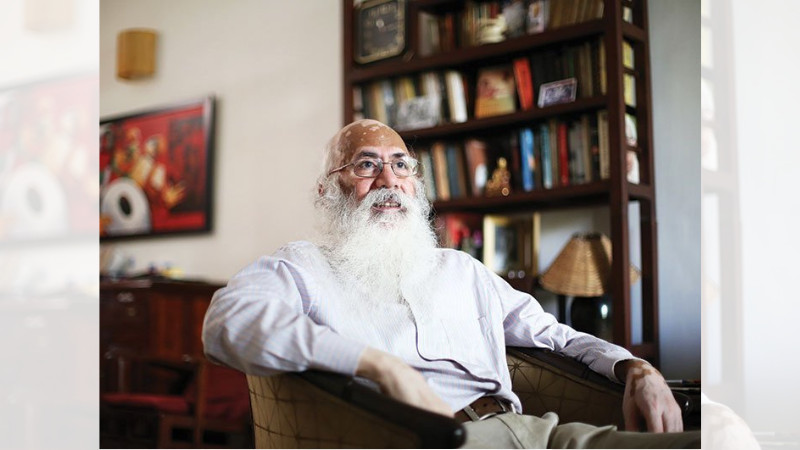
- Arun Kumar
(Retired Prof. of Economics, JNU)
Shri Sadanand Varde Memorial Lecture in Pune, October 11, 2025.
Tags: arun kumar economics politics capitalism socialsm paradigm shift 1991 1947 economic reforms Load More Tags









Add Comment