
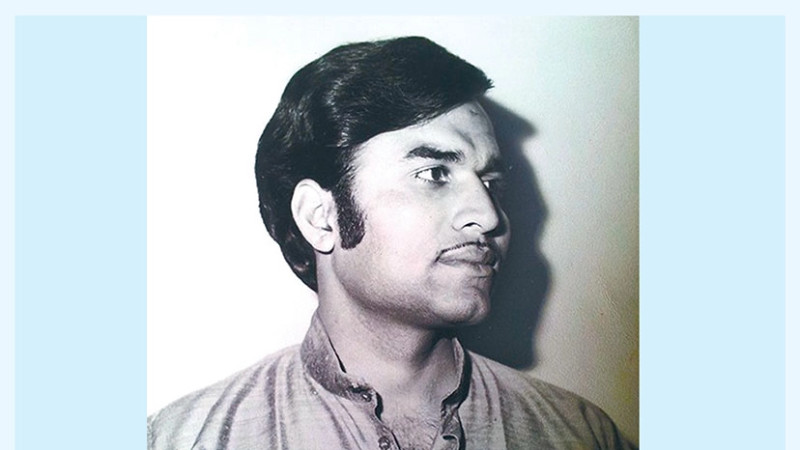
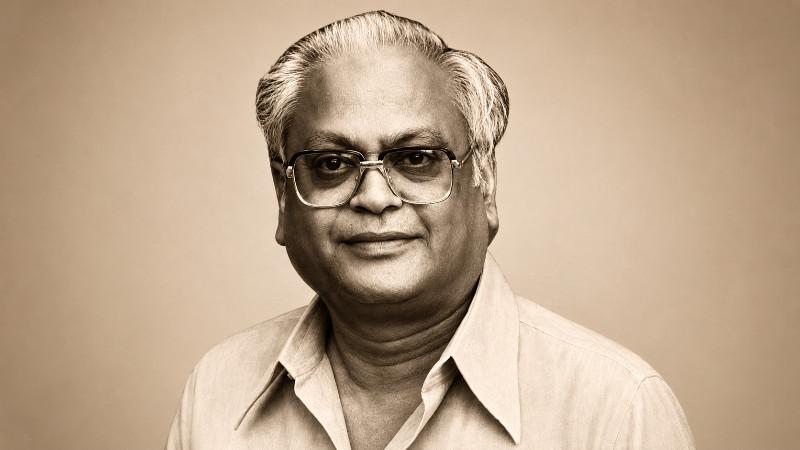
Kumar Saptarshi lived a truly rich and long life of nearly 85 years, from 21 August 1941 to 18 July 2026. It is well-known that he founded Yuvak Kranti Dal (Youth Revolutionary Organization) at the age of twenty-five and remained active in public life for the next sixty years. But very few know about his formative years or the non-public aspects of his life. His younger brother Pravin Saptarshi paints a heartfelt picture of those unknown years and aspects in this article. It introduces us to a different side of Kumar Saptarshi, leaves us in awe, and inspires deep respect.
My elder brother Kumar Saptarshi became a people leader, a true leader of the masses. He led about forty to fifty successful reform movements, inspired generations of young people, and motivated rural and urban, educated and uneducated people alike. From bonded labourers to university vice-chancellors to judges of the Supreme Court, people from every section of society respected him. Idealistic leaders and countless great books of our time played a vital role in shaping his personality. I had the greatest privilege of witnessing how his character and convictions began to form right from our childhood.
In 1938, our father was appointed as a government doctor in Khed, a village in Karjat taluka of Ahmednagar district. In those days, there were very few doctors serving the rural parts of the district. Government doctors earned a salary of fifteen rupees per month; still, their financial position in the villages used to be comfortable. Our parents got married in 1939. My mother was from Shevgaon in Ahmednagar district. Her father, our grandfather, Bapu Master, was a friend of Balasaheb Bharde. In Ahmednagar district, Balasaheb was respectfully called Sadguru; in Shevgaon, people addressed him as Dada. We, however, called him Mama. Kumar was born in 1941, when my parents were living in Khed. Soon afterwards, our father was transferred to Rashin. Our four other siblings and I, we were all born there. We addressed Kumar as Bhau.
He studied up to the fourth standard in the Zilla Parishad school at Rashin. Our father himself taught him at home, and as a result, he passed two standards in a single year. By the age of eight, he had already passed the fourth standard. Our father valued education. Hence, he sent his beloved son to a school in Ahmednagar from the fifth standard itself. Our father had grown up as an orphan, at the home of Papa Hatavalane. He entrusted Kumar to the care of the same family. Papa had a son; we used to call him Om Kaka. His sister also lived in the same house. She was a child-widow, and she maintained an extremely strict discipline in the household. Bhau’s education up to the eleventh standard took place in that disciplined environment, and in Papa's affectionate care. From both Papa and our father, he inherited a deep warmth and affection for people. That quality remained with him throughout his life. Ask any of his fellow volunteers about his traits, and you’ll find genuine affection the common denominator.
I remember an incident from when Bhau was in matric class, and we were studying in the third and fourth standards. Yashwantrao Chavan was the Chief Minister at that time. He visited our village. My father had carried out the same experiment of getting me through two standards in one year, so I was much younger than other students in the class. And hence (as a bright student) I was asked to deliver a speech. I stood near the table in front of Yashwantrao Chavan and began speaking. I was physically quite small; the Chief Minister himself came up to me, lifted me up, and helped me stand on the table so that everyone could see and hear me. Everyone was worried for me, especially my father. They feared I might forget the speech. But I spoke confidently about the importance of malaria eradication, exactly as my father had taught me. Then, as Bhau had instructed me, I added one more demand: “We want a school up to the seventh standard in our village.” And what a wonderful thing happened! Soon afterwards, our village did get a school up to the seventh standard. At that age, I did not fully understand or appreciate that promises were duly fulfilled without any delay when leaders of the freedom movement were in power. But today, when I look back, I admire it. Because of that decision, my two sisters and I could complete our education up to the seventh standard in our own village. Later, Karmaveer Bhaurao Patil visited our village and stayed at our home. He started a high school in the village. It provided education from the eighth to the eleventh standards.
Whenever Bhau came home during vacations, he used to express an earnest wish to bring good educational facilities similar to those in Ahmednagar to our village. Perhaps the pain of living away from his parents at a very young age was etched on his heart. Many years later, when the girls of Khed requested him to start a high school in their village, he agreed without a moment's hesitation. He personally met Chief Minister Vasantdada Patil to obtain permission. In those days, the government used to take action justly. Bhau had a long history of leading agitations against Vasantdada’s government, yet Vasantdada granted permission, and soon after, Loknayak Jayaprakash Narayan Vidyalaya was established in Khed on 7 June 1984.
In 1960, Bhau shifted from Nagar College to S.P. College in Pune for the second year of his B.Sc. The next year, our second brother, Anil, joined Fergusson College for his pre-degree course. At the same time, our third brother, Satish, had just passed the eleventh standard and planned to go to Pune for further education. Bhau proposed that our younger sisters, Lata and Mangal, and I should also move to Pune for our schooling. He convinced our father that, instead of spending money on hostels and food for just the three of us in Pune, we could use the same amount to rent a bungalow where the family could stay together with our mother and benefit from quality education. Our father agreed. I went to Modern High School, while my two sisters joined Bhave High School.
We rented a bungalow named ‘Swanand’ in Rajendranagar. It was a newly developed colony at that time. Ambil Odha (a stream) flowed behind our house. Snakes were common in our area. Whenever someone spotted a snake, people would shout, “Call one of the Saptarshis!” Any one of us, even our youngest sister Mangal, would run there and kill the snake. Bhau had taught us, scientifically, how to identify poisonous snakes and what precautions to take.
Bhau loved me very much. There was a gap of nine years between us. When I was four, he was already thirteen, and at that age the difference felt huge. He was the one who taught me to ride a bicycle and swim. More importantly, I could read and write both Marathi and English by the age of merely four or five years, because he taught me. He had a unique method of teaching. Instead of holding my hand and making me write, he would trace letters and numbers on my back with his finger. I would then write them on my slate. Rather than holding my hand and teaching it to write, he imprinted the letters directly into my nervous system. Perhaps that is why my handwriting has remained fairly good all my life.
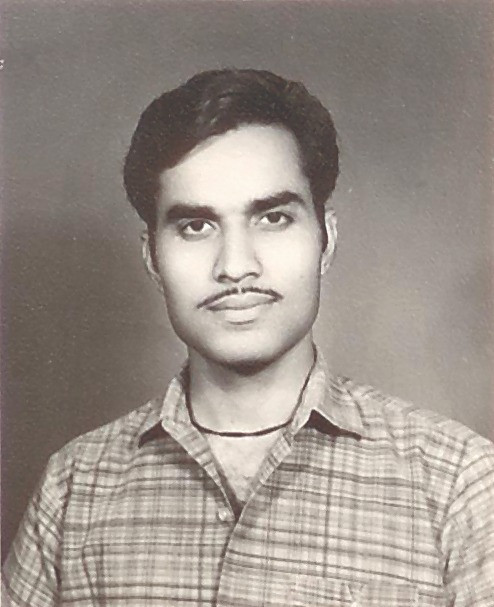 Our father had joined government service in 1938, and for the next twenty years we had lived only in rented houses. Father was influenced by Mahatma Gandhi’s firm principles. He did not want to buy land or accumulate excess property. But in 1958, when I was in the fourth standard, he decided to build a house in Rashin. One of his engineer friends from Ahmednagar, Mr. Bhatia, advised him to build a house with a slab. But that would require a truckload of cement, and it was a major problem, as in those days, cement was sold mainly on the black market, and it was absolutely out of the question to buy from there! At that time, Bhau was barely seventeen years old, but he took the responsibility of solving this problem. He travelled to Mumbai, met ministers, introduced himself, requested their help, obtained a government permit for cement, and handed it over to the authorised stockist. He still fell short of some money. So he borrowed the remaining amount from one of our father's acquaintances, a businessman in Pune, and finally brought an entire truckload of cement to Rashin. The contractors and vendors in our village, and those from Ahmednagar in Mr. Bhatia’s network, were simply astonished.
Looking back, I feel this was where he first learned how to deal with governments and government officials. He honed and used that skill throughout his life. Whether it was a department secretary, a police commissioner, or any other senior officer, Bhau had the remarkable ability to convince them of his point of view and get the work done. It was remarkable that even after heated arguments, the officers invariably ended up becoming fond of him.
There is a Marathi saying: 'घार हिंडते आकाशी, चित्त तिचे पिलापाशी' (The kite may soar high in the sky, but its heart remains with its little ones in the nest.) Exactly like that, Bhau always had his heart in Rashin, no matter where his work took him. While studying at Nagar College, he had undergone Home Guard training. Whenever he came home during vacations, he would train his childhood friends in the same.
One year, Bhau came up with an initiative. Our village hosted a huge fair around Dussehra every year. Large crowds would gather from the first day of Navratri until the full moon. He suggested placing large earthen pots of cool drinking water, glasses, and dipper ladles at a few convenient places so that pilgrims could drink water freely. As expected, the proposal had to be approved by the village landlord. (There was effectively only one landlord in the village. That was how the feudal system worked.) The landlord dismissed the idea, saying, “Kumar, what nonsense is this? If you start giving people such facilities, they'll demand more. They'll expect free meals too.”
That was the real beginning of Bhau's feud against feudalism. From that day onward, he understood something very clearly. India had certainly achieved Independence, but freedom had not yet reached villages like ours. The reason was obvious to him. The feudal families never really let go of feudalism. The same families who had served the Mughals later served the Peshwas, then the British. After Independence, they joined the Congress and today are with the BJP. He often summed this issue up in one sentence: “The seeds of counter-revolution are always present within every revolution. “He discussed these ideas with thinkers who were close to him, such as Raosaheb Patwardhan, Achyutrao Patwardhan, and Balasaheb Bharde. They emphasized, “You should make yourself strong and capable enough before you challenge the power structure of a village; otherwise, you will only be the next victim of the system, and will never achieve anything.”
Bhau was determined to challenge feudal rule through public awareness. He came up with another imaginative idea. Our drought-prone region had a large population of Pardhis, a nomadic tribal community. Many among them survived through theft and robbery. The common people feared them. Bhau decided to reach out to them.
For two months, he travelled by bicycle and on foot, organising impromptu meetings and building trust among the Pardhis. Finally, he organised a one-day gathering of nearly 2,000 Pardhis in the school grounds at Rashin. Grain and vegetables were collected locally. The Pardhis themselves cooked the food. Bhau's volunteers and the Pardhis sat together and ate as equals. Later, Bhau delivered the concluding speech, which lasted nearly two hours. He spoke about their problems with such empathy that it felt as though he was one of them. In the end, he gave them a clear conclusion. He asked, “All these years, you've been stealing. Have you ever received any returns, ever made any profit? They denied unanimously. He asked, “Why not?” Someone answered, “Out of every rupee we steal, eight annas go to the landlord, four annas to the middlemen, and only four annas come to us. But if we are busted, all sixteen annas' worth of beating is ours alone.” This was Bhau's unique way of explaining the imbalance between risk and profit sharing, even to people who had never been to school. And then, he asked them to take an oath: “From today onwards, we will not steal.” That day, one wing of the feudal system was cut away. I observed Bhau become the person who’d work such wonders. The youth of the village watched him too. And gradually, committed volunteers began strengthening his cause.
After relocating to Pune, Bhau joined B. J. Medical College, and I was studying at S.P. College. By then, he had built a large network. Meetings of the Youth Organisation were held regularly. Every Sunday, we would travel to Nanded village near Pune (today's Nanded City). The medical students would provide basic treatment and medicines, while the rest of us carried out surveys. Long discussions followed. We jokingly called them “polishing heads together”
Around that time, Jayaprakash Narayan (JP) appealed to come forward and help the drought-affected people of Bihar. The Youth Organisation decided to go. But we didn’t want to accept money from the Bihar Relief Committee. We decided to raise our own funds by polishing shoes, cleaning cars, working as waiters, and doing other small jobs. Nearly a hundred young men and women took part. Not only did we collect enough money, but we also went through the process of becoming de-classed and de-casted. We travelled to Bihar in batches of four or five people. .webp)
Each batch stayed for fifteen days or a month. Altogether, around thirty to forty of us worked there. For many of us, it was our first journey outside Maharashtra. Bhau was part of the very first batch. They stayed in a village called Rajauli. They provided medical treatment and organised the distribution of one meal a day to those affected by the famine. During those days, we realized that satisfying another human being's hunger is the true religion, the true god!
They came across a village head named Gauri Babu. He owned two elephants. The amount of food consumed by just one elephant could have fed forty people. Bhau told us about this. He made is realize that though the drought itself was a natural calamity, humans caused such injustice every single day. Before returning, he held detailed discussions with leaders such as Jayaprakash Narayan, Vinoba Bhave, and Karpoori Thakur. Looking back, I feel this was where the seeds of the Yuvak Kranti Dal first began to take root.
Our batch was the last one to return from Bihar. It included Dilip Bhandare, Samprasad Vinod, and me. We had been assigned the task of constructing tube wells. We travelled through many villages and met several ministers. Whenever they learnt that we were Kumar Saptarshi's volunteers, they praised us warmly. Vinoba Bhave once introduced us to a gathering by saying, “These young people are from Pune. Kumar has motivated them. They have been working continuously in Bihar for six months.” He even knew Samprasad's father, Dhundiraj Shastri Vinod. Whenever we stayed at Sadaqat Ashram, we slept in Jayaprakash Narayan's own room. I still remember one incident. One day I was exhausted and whimpered in my sleep with pain. JP said, “The child is tired.” And, with the tenderness of a mother, he gently massaged my feet.
I experienced the same warmth in Bhau. Once I fell seriously ill with typhoid. Initially, I was treated at home, but the fever did not subside. Eventually, I was admitted to Sassoon Hospital and had to stay for almost three weeks. Every single night, Bhau stayed there with me. At that time, he was a third-year medical student there. Senior doctors—including Dr. Sardesai—examined me regularly. Bhau had many friends in the hospital, and gradually they became familiar to me too—Dani, Bal Mulay, Ashok Dixit, Taware, Anil Awachat, and several others. Almost all of them later became renowned doctors. Only Anil Awachat chose to devote himself completely to the Yuvak Kranti Dal. This large group of medical college friends remained close to Bhau throughout his life. Even many of his professors continued to share warm relationships with him. Even, the former dean Mendoza of B. J. Medical College, Dr. Mendoza. Bhau had once led an agitation against Dean Mendoza. And still, afterwards, they shared an affectionate relationship. And the same happened with Vice-Chancellor Dr. Apte. Bhau had organised a movement against him too, but later their relationship took a turn for the better. I believe by this time Bhau had embraced Gandhism in every sense.
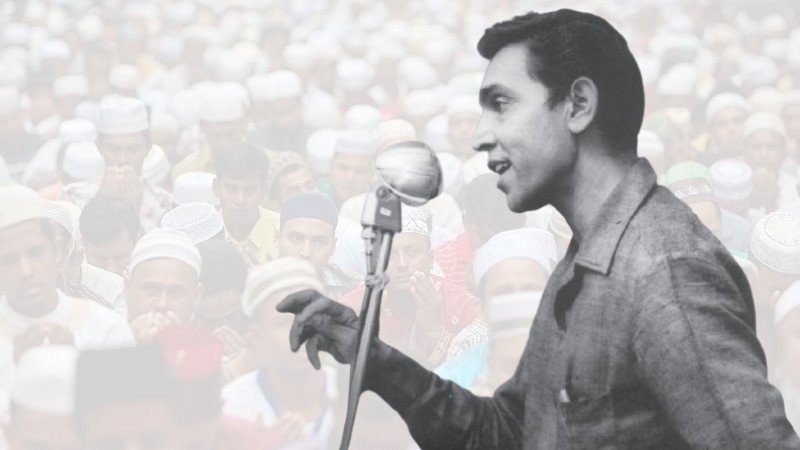
 Coming back, when our final batch returned from Bihar, we got off the train at Pune railway station, but instead of going home, we went straight to Sinhagad Fort. There, after intense discussions, the Yuvak Kranti Dal (Yukrand) was formally founded in November 1967. Its symbol was decided—a bird breaking free from a square frame. The organisation also clarified its ideological position. No existing political party or organisation fully represented the values we believed in. People often asked Bhau, “Then how will your strength grow?” His unwavering answer used to be, “Let any like-minded people come and join us. Yukrand is not a cadre organisation. It is a mass organisation. Anyone is welcome, but only if they accept our principles.”
The encouraging part was that almost every respected leader in Pune and across Maharashtra gave their blessing to the new movement. Similar to JP, S. M. Joshi (Anna) treated all of us with immense affection. Bhau considered him his Guru.
When communal riots broke out in Pune, Bhau accompanied S. M. Joshi in efforts to restore peace. That experience taught him both the science and the practical skill of preventing riots. He would often say with complete conviction, “We have taken a vow to keep Pune free from riots. “We regularly discussed the riots in the weekly meetings of Yukrand. We analysed how and why riots were instigated, and what caused them to flare up. Our weekly meetings were a process of constantly polishing and sharpening our thoughts.
- Pravin Saptarshi
Tags: yukrand obituary memoir sadhana digital jaiprakash narayan bihar doctor gandhi satyagrah ahimsa constitutional protest law protests rashin yuvak kranti dal youth organization pune ahmednagar fighting feudalism feudalism Load More Tags




Add Comment