
For about ten to twelve days during the Ganesh festival, day and night, Pune is filled with enormous amounts of noise. On one side are the obstructions created by Ganesh festival pavilions erected at various intersections, and on the other are the deafening sounds of loudspeakers, dhol-tashas, and DJs. There are more than a thousand Ganesh festival committees in Pune. During the festival, several hundred thousand enthusiastic visitors come from outside Pune to see the displays at night. As a result, roads are blocked, parking becomes difficult, and walking on the streets becomes extremely challenging. Consequently, many people who live in Pune leave the city for the last four or five days of the festival, or even for the entire ten to twelve days.
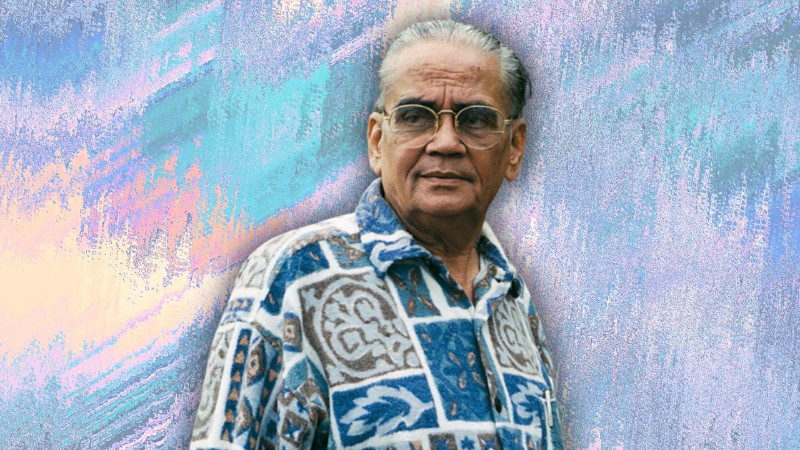
On 24 August, a small spark ignited at a meeting held at the Pune Municipal Corporation. It turned into a blaze, and over the next two weeks, it spread across Pune and the surrounding areas like a wildfire. Its flames could be seen in many cities across Maharashtra. This is not an exaggeration; it is absolutely true. The meeting had been organized in preparation for the Ganesh festival coming up in mid-September. It was attended by a large gathering of around 500–700 people, including the mayor, the municipal commissioner, corporators, Ganesh festival committee workers, and leaders of political parties. There were very few ordinary citizens among them. After all the other discussions were over, the organizers asked, “Does anyone have anything to suggest or say?” At that point, a 37-year-old man named Vidyanand Bapat stood up. He said, “I am a representative of the citizens. During the Ganesh festival, the deafening noise in Pune causes immense hardship to citizens. Therefore, DJs and similar extremely loud musical instruments, as well as loudspeakers, should be completely banned.”
It was natural for the Ganesh festival committee workers to strongly reject this demand. Even so, Vidyanand continued to put forward his views in a rational manner. As a result, the language of opposition became increasingly aggressive. People began shouting with an attitude of questioning him: “Who does this wise guy think he is, coming here to lecture us?” The police then removed Vidyanand from the hall. Naturally, the picture that emerged was of hundreds of people on one side supporting the revelry of the Ganesh festival in Pune, and Vidyanand standing alone on the other side opposing it. On the surface, it appeared that the majority had rejected him. But the reality was different. There are a huge number of people who agree with what Bapat was saying, but they are silent, quiet, inactive, or helpless. Therefore, their majority is not visible. Evidence of this began to emerge from the very next day.
Interviews with Vidyanand began appearing on various YouTube channels. He continued to present his position clearly and precisely in his speeches. It became evident that he had a strong intellectual foundation. Clear pronunciation, command of standard Marathi and English, and his use of Sanskrit quotations when appropriate made his interviews increasingly noteworthy. Because he connected his arguments with the Constitution, laws and regulations, civil rights, and individual freedom, his position began to gain greater acceptance. His rational arguments concerning tradition, culture, and religion gave his presentation even greater force. As a result, the number of interviews increased and the response to him continued to grow. He too continued to make the same points firmly and repeatedly, without becoming tired or irritated, while offering increasingly varied arguments.
Meanwhile, on 3 September, a hot-headed young man assaulted him on the street. After that, Bapat became even more determined, stronger, and more fearless. His support grew further, to such an extent that on 6 September a citizens’ march was held in Pune to condemn the assault on him and support his position. It received a fantastic response. Social media and alternative media outlets strongly promoted his views. Then television channels also joined in, and newspapers kept the issue alive. Naturally, those opposing him also came forward. But the questions raised by Vidyanand and the issues surrounding them are so indisputable that those opposing him were exposed. Those offering superficial support seemed to be on the side of established and disruptive elements. Some media outlets, of course, appeared neutral, cautious, or defensive. It also became evident that they were quite ineffective and did not have any great influence.
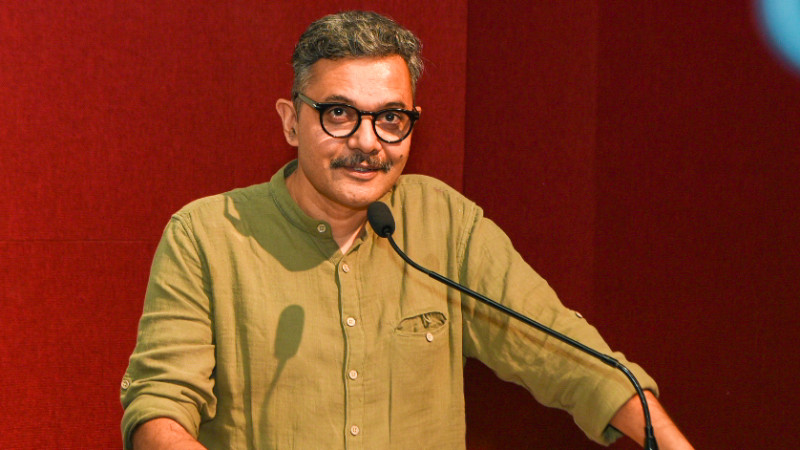
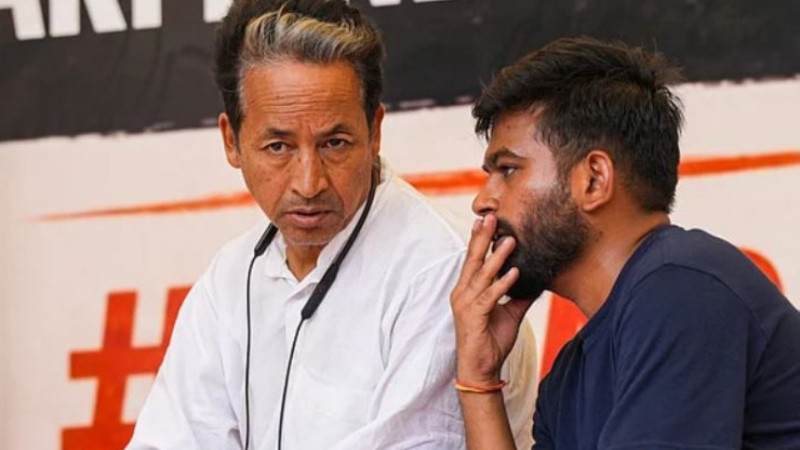
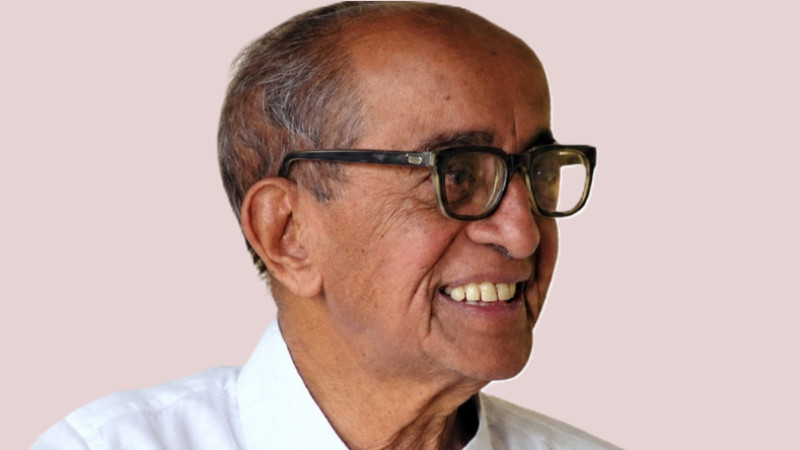
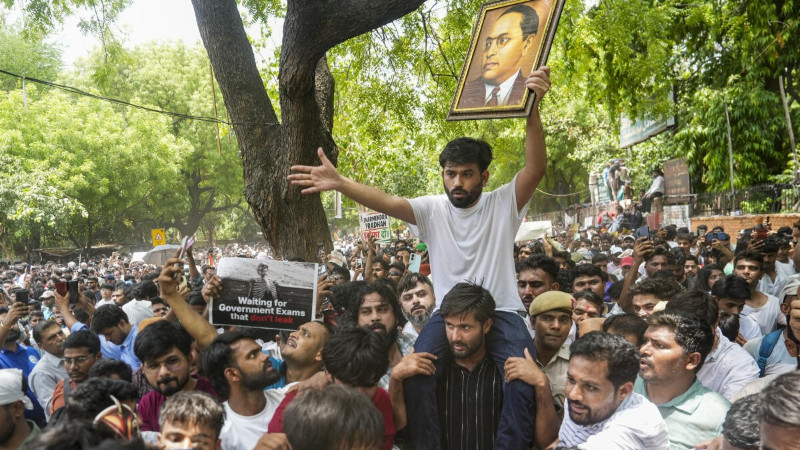
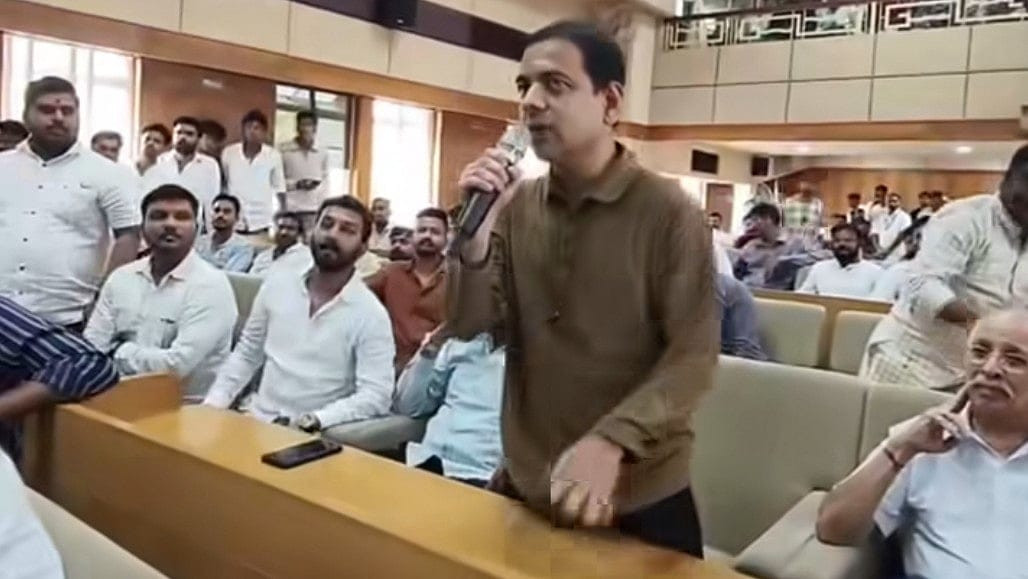 (Vidyanand Bapat Speaking At Pune Municipal Corporation Meeting)
These rapidly unfolding developments have created a dilemma for the local police and administration, and the situation has reached the point where the state government and the courts will have to find a way out. By 12 September, nothing concrete was announced by the police, administration, government, or courts. And the Ganesh festival is only two days away. Perhaps, over the next two days, a decision will be announced either to impose a complete ban on DJs or permit them for a limited period, along with some restrictions on dhol-tasha performances. Some set of regulations will probably be announced, although how effectively they will actually be implemented is another matter. Most likely, it will amount to nothing more than “another spectacle” during the Ganesh festival. Nevertheless, it is certain that the frenzy will be restrained at least to some extent. In just two weeks, the face and voice of Vidyanand Bapat have become a familiar thing and increasingly relatable to the nearly three quarters of a crore (75 lakhs) people of Pune and Pimpri-Chinchwad. Other cities across Maharashtra are also beginning to become familiar with that voice and face.
What is Vidyanand’s position?
For about ten to twelve days during the Ganesh festival, day and night, Pune is filled with enormous amounts of noise. On one side are the obstructions created by Ganesh festival pavilions erected at various intersections, and on the other are the deafening sounds of loudspeakers, dhol-tashas, and DJs. There are more than a thousand Ganesh festival committees in Pune. During the festival, several hundred thousand enthusiastic visitors come from outside Pune to see the displays at night. As a result, roads are blocked, parking becomes difficult, and walking on the streets becomes extremely challenging. Consequently, many people who live in Pune leave the city for the last four or five days of the festival, or even for the entire ten to twelve days. Similarly, many people from outside Pune avoid coming into the city for any work during this period. Movement throughout the city becomes restricted and the pace of work slows down. Even more serious is the fact that residents of the densely populated central parts of the city lose sleep and are subjected to deafening noise; in some cases, people even suffer damage to their eardrums. The situation becomes extremely difficult for young children and the elderly. Patients in hospitals find it unbearable. Working in schools and offices becomes difficult. In short, the entire city is held hostage.
If local activists or members of Ganesh festival committees are approached with a request or complaint, one generally receives evasive responses, and more often than not, sarcasm and ridicule. One may hear the indifferent response, dismissing them. At other times, people might arrogantly say, “If you are going to complain, we will turn up the volume further.” If one approaches the police, the response may be, “We’ll see, we’ll tell them, we’ll do something,” or, “There is pressure from above; please be patient,” or one encounters a sense of helplessness.
The Pune Police Commissioner has stated that at least 8,000 complaints have reached the police in the eight months preceding the current Ganesh festival. Although they do not say so openly, it is obvious that the government and political leaders instruct them to manage the situation. During this period, police officers’ leave is cancelled, they are stationed for security duties day and night, barely manage meal times, and their sleep is disrupted. Ganesh festival committee workers do not pay heed to them. Their leaders arrogantly silence the police. The police are caught between a rock and a hard place. If complaints are made to political party leaders or workers, people are told, with an artificial display of affection, “Please adjust a little. They are our own workers. During festivals and celebrations, there are bound to be some ups and downs.” What this really means is: grin and bear it! If one approaches the courts, after listening to a great deal of pointless discussion, some set of regulations is presented. In order to accommodate both parties, these regulations are often vague and contain loopholes. Moreover, the courts have no control over the implementation of those regulations. The media, meanwhile, continually raises a hue and cry in its own way, but it is ultimately just a cry in the dark, and goes unnoticed.
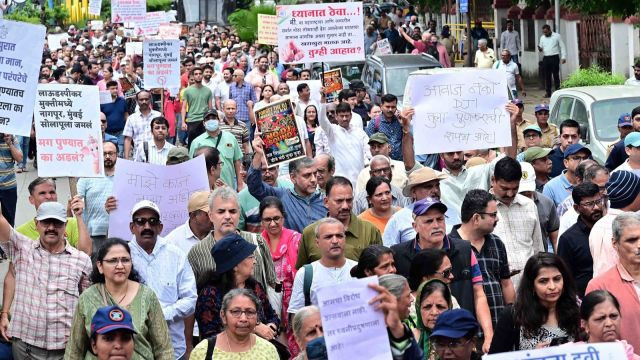 In short, during the Ganesh festival, the citizens of Pune are left with no alternative. At least half the city’s population, around 2.5 million people, are distressed during this period. Against this backdrop, Vidyanand Bapat has become their unofficial representative. His voice has therefore become so loud that, for the time being at least, the slogan “Whose voice is it? Vidyanand Bapat’s!” has literally become true in Pune.
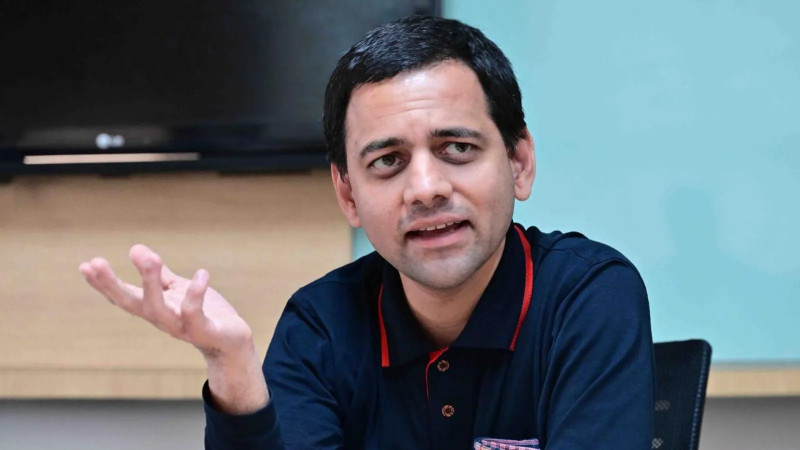
Vidyanand has given more than 50 interviews over the past two weeks. He describes himself as an atheist. He has a B.Com. degree, comes from the Konkan region, and works for a BPO company. He is an ordinary citizen.
His reading is broad and varied, and he is knowledgeable. He has intellectual clarity and presents his arguments rationally. He is a well-wisher and supporter of social movements. For the past five or six years, he had felt that something needed to be done about this deafening noise. For the past three months, he had been submitting applications and petitions to the government on the matter. As part of that process, he attended the Pune Municipal Corporation meeting. He speaks about laws, individual freedom, and citizens’ rights, while those opposing him speak about tradition, religion, and culture. But he bluntly asks, “How can tradition, religion, or culture cause distress to others?” He also asks, “How can being an atheist or being religious have anything to do with causing or suffering inconvenience?” Some hypocritical people attempted to arrogantly tell him: “You have come from Ratnagiri; you are not originally from Pune, so don’t stay in Pune.” In response, he refuses to allow the discussion to be diverted, telling them, “Talk about the original question; stick to the issue.” He is asked questions such as: what does he plan to do next, will he form an organization, will he oppose the festivals of other religions, will he oppose the birth and death anniversaries of great figures. His firm answer to such questions is “yes.” Some interviewers also tried to provoke him. One or two television interviewers attempted to treat him almost as though they were conducting a ragging session in a hostel. Even then, Vidyanand did not lose his composure. He deserves credit for that restraint, and his fearlessness deserves respect.
In fact, Pune is known all over India for various reasons. One of those identities is its association with the Ganesh festival. In 1893, Lokmanya Tilak started the Ganesh festival with the aim of creating a sense of nationalism and social unity. But over the next 25 years, during his own lifetime, the festival gradually acquired a more ostentatious character. After 1950, noisy revelry increasingly dominated it. Perhaps that is why, in 1956, D. B. Karnik, editor of Maharashtra Times, wrote in a small book titled “The Editor’s Pleasant Dreams” : “In the present era, there is no longer any connection between the Ganesh festival and discipline.” Seven decades have now passed since that book was published, yet the Ganesh festival has continued to deteriorate and has become increasingly troublesome and disruptive. Political parties need to manage their workers and their finances.
At the same time, they also need rowdy hooligans. Many people want the Ganesh festival as an opportunity to extort money in the name of donations. Political leaders also need such religious frenzy to keep the public in a state of intoxication. Against this background, it is only natural that Pune’s identity as the “home of learning” or the “cultural capital of the country” should gradually become blurred. Nineteenth-century Pune gave rise to many streams of social reform. Some reformers spent their entire lives working for individual, seemingly minor reforms. At the time, some of them were called eccentric. Vidyanand Bapat occupies a place in that tradition of eccentrics. Those at the centre, on the periphery, and even beyond the periphery of circles committed to reform and civility should support him in every way possible.
Because this issue is no longer limited to the Ganesh festival. To some extent, similar things can also be seen during Shiv Jayanti and Ambedkar Jayanti. The way Ram Navami celebrations and Anna Bhau Sathe Jayanti are being celebrated, seem to be following the same direction. These are usually one-day events, and even then, the processions take place during specific times and in specific areas. Therefore, they are comparatively more tolerable. Not so much in Pune, but in cities with larger Muslim populations, similar things happen during Muharram and other festivals. In Pune, there is no significant noise pollution during the Ashadhi Ekadashi Wari, but the manner in which roads are blocked for two days is troublesome. There is also additional road obstruction whenever the Prime Minister, Chief Minister, or President visits. There is a need to impose controls in all these matters. This is work that will have to be done continuously, and whoever is willing to fight for it needs to be supported.
- Editor
Translated by Rahee Dahake
kartavyasadhana@gmail.com
(The Original Marathi Editorial is published in Sadhana Weekly's issue dated 19 September 2026. It will be available on weeklysadhanaa.com shortly.)
Tags: noise pollution public festivities ganeshotsav dahi handi साधना डिजिटल विद्यानंद बापट गणेशोत्सव दहीहंडी आवाज ध्वनिप्रदूषण Load More Tags




Add Comment