
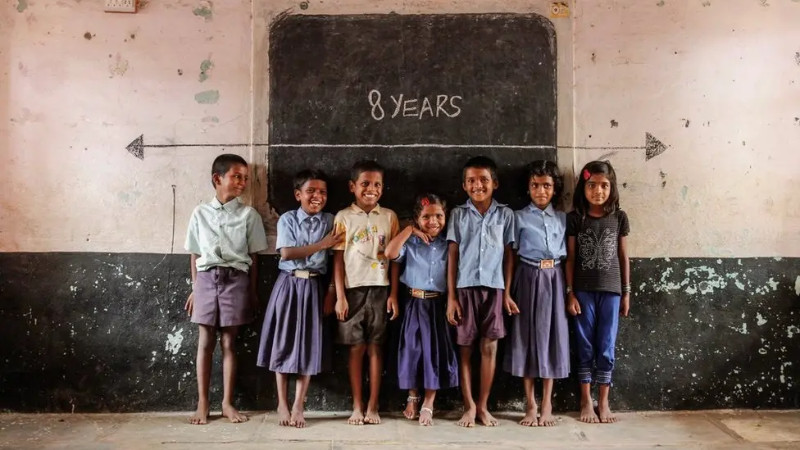
Is it the Impact of Being a Predominantly Vegetarian Nation? India has the world’s largest vegetarian population. That shapes our nutrition crisis, at least in a major part. The good part of veg diets is that they are cheaper, culturally accepted, and have a lower environmental footprint. We have also have good share of a dairy-based economy. We’re the number one milk producer, which helps many vegetarians get protein and calcium. But the challenging part is a cereal-heavy veg diet without enough pulses, milk, soy, or eggs. It often leads to deficiencies of protein, B12, iron, and zinc.
“India's Average height has declined over the years”
“As the world gets taller... Indians are getting shorter”
When flashes of such news appear on your screen, that too, through internationally reputed media houses, it brings utter discomfort, uneasiness, a little bit of shame, disgust, and yes, guilt! Because, even though the decline is 0.12cm, which appears to be a negligible number, the problem and its implications are way deeper than we can imagine. Hence, it should not be neglected. In this context, we come across three terms that are consistently used.
Stunting: ‘Child stunting’ indicates that a child is too short for their age, reflecting long-term and recurrent undernutrition, a critical metric for chronic development.
Wasting: ‘Child wasting’ indicates that a child is too thin for their height, reflecting sudden and severe weight loss, a critical metric for child health.
Underweight: ‘Child underweight’ indicates a child weighs too little for their age, reflecting a combination of short height or severe thinness, which is a critical metric for overall growth.
Recently, in my College, the NCC girls' unit was supposed to recruit girl cadets, but the majority of 16-year-old girls could not pass the height test. Because Indian women's average height is 152 cm, and the bar was set at 155 cm. Or when a 17-year-old boy walks into an army recruitment center and is rejected for being too short (162 cm), we call it “not meeting standards”. We often say that “she’ll, or he'll, grow later”. But there is not enough time left for growth. What if the problem isn’t the individual’s body shape and size or just a matter of time? What if it’s the problem of the whole country? Like, we do not get enough Olympic medals??
India is in the middle of a quiet height crisis. And the good part is that our government actually agrees with it. Why does it even matter? Because height is considered the Barometer of Health: Average height reflects a population's cumulative childhood health, disease environment, and nutritional adequacy.
Press Information Bureau of India (PIB) is the official data dissemination wing of the Government of India. It accumulates, processes, rounds off, reports, and summarizes official national and international health statistics in its press releases and summaries. It includes data related to child health in the country. The data is stark. India's child stunting rate is among the highest in the world; in fact, higher than that of many poorer African countries. According to India's National Family Health Survey 2019-21 (NFHS-5) conducted by the Ministry of Health & Family Welfare, among children under the age of 5 years:
- 35.5% are stunted
- 19.3% are wasted; and
- 32.1% are underweight
Then there is adult height data derived from Anthropometric databases like NCD-RisC/ WHO. The average height for men is ∼165 cm and women ∼152 cm. Interestingly, in China, the numbers are ∼170 cm / 158 cm, and in South Korea ∼174 cm / 161 cm.
According to NFHS-5, state-wise stunting among children under 5 years is as follows. The range unfolds from the worst-case scenario to the best-case scenario:
Bihar 42.9%,
Uttar Pradesh 39.7%,
Madhya Pradesh 35.7%,
Maharashtra 35.2%,
Goa 25.8%
Tamil Nadu 25%,
Kerala 23.4%.
We, the proud Maharashtrians, are closer to MP and UP than Kerala!
Then the question arises: Why Are We Short? Is it just about Genes? The clear answer is an emphatic NO. Usually, height is 80% genetics and 20% nutrition + environment + health. But genes decide the projection of an individual's height; whether or not that height will be achieved will be determined by nutrition, environment, and other factors. Korea fixed their problem with nutrition, so did Brazil.
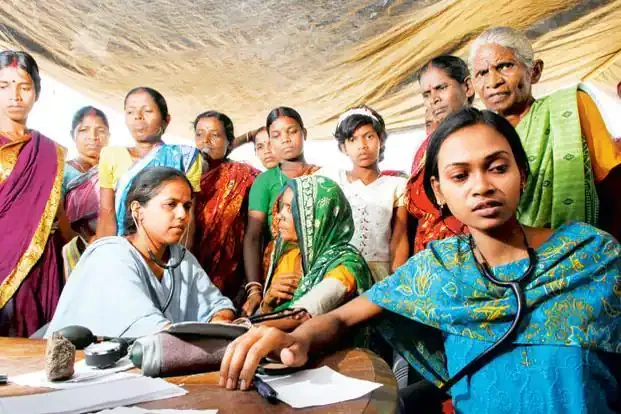 So, what are the big drivers in India for shortness? The first and foremost is maternal malnutrition. 57% of women between the ages of 15 and 49 are anaemic. When they give birth, their children are chronically malnourished. We won the Green Revolution, but we missed the “Protein and Micronutrient Revolution”. It affects the intergenerational cycle. Short mothers give birth to babies with low birth weight, who grow up to be short adults.
Another major factor is poor diet in childhood. Only 11% of kids between 6 and 23 months get an adequate diet. Others get only a diet low in protein and fibre.
Repeated diarrhoea and gut infections from poor sanitation stunt growth. In a country like India, where cleanliness and hygiene in public places are so glaringly poor, it’s hardly surprising that we get sick every now and then. And let's not even begin to talk about the cliche topics like water, air, soil and noise pollution.
We also ignore the second growth window between 10 and 19 years and create a huge adolescent gap. There is also a social angle.. Disadvantaged groups, such as Scheduled Castes and Scheduled Tribes in rural areas, and especially women, face the steepest declines in average height.
Short height is not about looks or vanity. It’s a biomarker of lost human potential. Shorter women face higher maternal mortality and deliver smaller babies. The cycle continues. Short people have a higher risk of diabetes, heart disease, and poor pregnancy outcomes. Surveys show that stunted children earn 20% less as adults. Because stunting also affects brain growth and cognitive development.
Millions of people are disqualified every year from sports teams, army recruitments, and other jobs that require specific physical attributes. Our nutrition-deprived people fail to meet their height cut-offs. It’s a factor that affects our performance in major sports events like the Olympics. We earn fewer medals than our competitors. Effectively, India loses 3 to 4% of GDP to stunting.
Is it the Impact of Being a Predominantly Vegetarian Nation? India has the world’s largest vegetarian population. That shapes our nutrition crisis, at least in a major part. The good part of veg diets is that they are cheaper, culturally accepted, and have a lower environmental footprint. We have also have good share of a dairy-based economy. We’re the number one milk producer, which helps many vegetarians get protein and calcium. But the challenging part is a cereal-heavy veg diet without enough pulses, milk, soy, or eggs. It often leads to deficiencies of protein, B12, iron, and zinc. NFHS shows 57% of women are anaemic. Plant iron is absorbed poorly in human bodies. B12 comes mainly from animal foods, and hence those deficiencies are common among vegetarians. Because of this, government programs like Mid-Day Meal and ICDS have to work harder. To fight anaemia and stunting, some state schools now give eggs to children, which has become a cultural debate.
Actually, being vegetarian should not be the problem. There certainly are good aspects of a vegetarian diet, like the lower rates of certain cancers. The problem is protein inadequacy in vegetarian diets. Countries like Japan and South Korea were also low-meat 50 years ago. They grew taller not by abandoning culture, but by adding dairy, eggs, fish, soy, and fortified foods.
Government programs like Poshan Abhiyaan, ICDS, Mid-Day Meal, Anaemia Mukt Bharat, free IFA, Calcium, Vitamin A, Albendazole, and hot meals do exist, but they look much better on paper and posters. The nutrition gaps remain. The reason is that India is such a huge and diverse country to begin with. Here are a few things we urgently need to focus on.
1. Address Nutritional needs and deficiencies of a person, especially in the two major growth windows. The first: 1000 days of every child; and the second: 10-19 years.
2. Pregnant women and adolescents need protein, iron, calcium, not just calories. Every woman and man must be thoroughly educated about the nutritional requirements.
3. Protein and dairy access: Make pulses, milk, eggs, and soy affordable. Redesign school meals for protein, not just fullness. In Maharashtra, the mid-day meal consists of just khichadi. We must try to incorporate proteins.
4. WASH + Health: Clean water, hygienic toilets, and deworming are basics. You can’t grow if you’re constantly sick.
5. Track height like we track GDP: District-wise data on average height of 18-year-olds should be curated and updated regularly. GDP alone would not be the measure for development if the full potential of the individual is not reached.
6. Educate, educate and educate. Health and nutrition education must be a part of formal education. We must find a way to educate adults - parents and teachers about Health.
When we talk about “Viksit Bharat 2047”, we talk about AI, semiconductors, GDP etc.. But a nation of stunted children cannot build a tall future. Height is not vanity. It’s nutrition. It’s health. It’s equity. If we want stronger soldiers, better athletes, healthier mothers, and a more productive workforce, we have to feed the next generation right. Otherwise, 20 years from now we’ll still be asking: “Why are we so short?” And the answer will be: “Because we didn’t act today.”
- Snehalata Jadhav
snehalatajj@gmail.com
(The author is a certified Nutritionist and dietician and professor at K.N. Bhise College of Arts and Commerce, Kurduwadi.)
References cited in the article:
1. Ministry of Health & Family Welfare, Govt of India. National Family Health Survey NFHS-5, 2019-21. India Fact Sheet. http://rchiips.org/nfhs
2. PIB Press Release, Ministry of Women & Child Development, 17 Dec 2021
3. PIB Press Release, Rajya Sabha, State-wise table.
Tags: 'wasting' underweight malnourished malnutrition height crisis shortness उंची कुपोषण आहार पोषण अनिमिया स्त्रियांचे पोषण Load More Tags















Add Comment